By the time October rolls around in Southern California, the rhythms of fishing begin to change. The long days of summer fade into crisp mornings and cooler evenings, and with them come a shift in both weather and regulations that define how anglers pursue one of the region’s most traditional and rewarding catches: rockfish.
For many, this transition is as much a part of the calendar as the first sign of fall leaves, and knowing the rules and techniques that come into play at this time of year can mean the difference between a productive day on the water and one that ends in disappointment.
Each year on October 1st, the California Department of Fish and Wildlife draws a line in the sand — or, more accurately, a line in the water. From Point Conception south to the Mexican border, the groundfish fishery switches to what is known as “offshore-only.” Put simply, anglers fishing from boats must now move outside the 50-fathom boundary, about 300 feet of water, if they want to keep shelf rockfish, slope rockfish, or lingcod. Inside of that line, the nearshore closes for boat-based anglers, which means no cabezon, greenlings, or nearshore rockfish can be retained.
Divers and shore anglers are exempt from these closures, but for those on boats, the rules are strict. The overall bag limit for the rockfish-cabezon-greenling complex remains at ten fish total, yet there are important sub-limits — only one copper rockfish may be kept, and no more than two vermilion and two canary may be part of that ten-fish bag. In addition, a few species remain off-limits year-round, including cowcod, yelloweye, bronzespotted, and quillback rockfish. These regulations are designed to conserve vulnerable stocks while still allowing anglers access to deeper-water species that can be harvested sustainably.
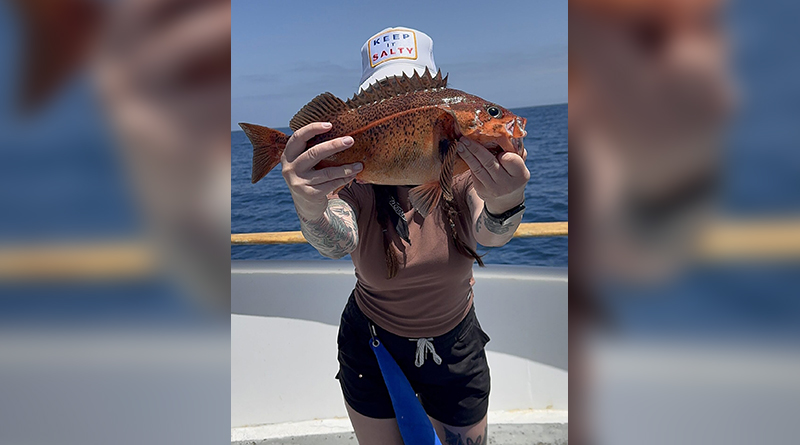
The offshore-only period not only changes the species mix but also pushes anglers farther from shore to legendary high spots like the 14-Mile Bank. This submerged plateau, located southwest of Newport Harbor, rises around 450 to 500 feet from much deeper surrounding water. Its structure concentrates baitfish, squid, and predators, making it a prime destination for fall anglers. On a given day, it might produce a sack full of vermilions, chilipeppers, and bocaccio, or reward patient anglers with a hard-hitting lingcod. And when warm currents push north, the same bank can host dorado, yellowtail, or even marlin and swordfish. It’s the type of spot that demands both preparation and respect, since it lies well offshore, unmarked by buoys, and exposed to shifting weather.
There’s far more to Southern California rockfishing than just the 14-Mile Bank. Any deep-water area with a rocky bottom can produce, but the 14 stands out because it’s an offshore bank fed by nutrient-rich upwellings that support a healthy food chain. It also spent years closed to fishing, and since reopening it has become one of the region’s most popular destinations. That said, anglers don’t need to limit themselves to one spot. Productive grounds stretch across the coast and islands, from the ridges around Catalina and San Clemente Island to the rich structure of the Channel Islands, as well as off Palos Verdes, Camp Pendleton, and La Jolla — each offering excellent opportunities for rockfish.
Targeting fish at 300 to 600 feet requires more than determination — it demands the right gear. Anglers who try to fish deep water with underpowered tackle quickly learn how punishing it can be. Conventional boat rods of six to seven feet, paired with stout lever-drag reels loaded with 40 to 50 pound braid, are the standard setup for dropper loop fishing. The braid is essential because monofilament stretches too much at depth, reducing both sensitivity and hook-setting power. A good rule of thumb is to use about one ounce of weight for every ten feet of depth, which translates to 24 through 48 ounce sinkers in real-world Southern California conditions, depending on current and drift.
Jigging rods offer a very different experience. Shorter and designed with a parabolic bend, they make it easier to pump heavy slabs up and down without wearing out the angler. These rods pair well with compact high-gear reels, and when matched with 300 to 600 gram jigs, they can be deadly on both rockfish and lingcod. Choosing between a conventional setup and a jigging rod depends on style. Bait fishing with cut squid is efficient and reliable, while slow-pitch jigging offers a more active presentation that can tease fish off the bottom and trigger reaction strikes. Speed jigging, though effective on tuna and yellowtail, is often too physically demanding for most anglers when working 600 feet of water.
Bait remains at the heart of SoCal rockfishing, and the classic standby is cut squid. It’s tough, stays on the hook, and appeals to everything from chilipeppers to lingcod. Live sardines and anchovies, when available, are highly effective on aggressive species like bocaccio and lingcod, though they rarely survive the long ride to the bottom. Many seasoned anglers use a combination, pinning a strip of squid alongside a sardine head or anchovy fillet to balance scent with durability. On private boats, some anglers will even send down a whole mackerel in search of a trophy lingcod, though heavier tackle is required to handle both the bait and the predator that might engulf it.
As gear and bait traditions continue, so too does an increased focus on conservation. One of the most significant modern requirements in the groundfish fishery is the use of a descending device. California law mandates that every angler targeting groundfish must carry one, and the reasons are clear. When fish are brought up from 300 to 600 feet, they suffer from barotrauma, the rapid pressure change causes their swim bladder to expand, often forcing their stomach into their mouth, bulging their eyes, and leaving them floating helplessly at the surface. Without intervention, these fish rarely survive, becoming easy prey for birds and sea lions. A descending device, whether a clamp, inverted hook, or weighted cradle, allows the angler to send the fish back down to 100 feet or more, where the pressure recompresses the bladder and organs. Survival rates exceed 80 to 90% when used correctly, and these devices are far more effective than older venting methods that involved puncturing the fish. Beyond being a legal requirement, they’re an essential conservation tool that helps ensure rockfish populations remain healthy and that future seasons remain open.
The true reward of rockfishing, however, isn’t just the fight on the line but also the quality of the meat once the day is done. Rockfish are lean, flaky, and mild, with a slight sweetness that makes them incredibly versatile in the kitchen. Their fillets are pinkish when raw, turning bright white when cooked, and their cold-water habitat contributes to their quality. Fish pulled from 600 feet come up icy cold to the touch, and the deep, stable temperatures preserve firmness and flavor longer than many other species. Unlike oily fish such as mackerel, rockfish hold their texture well and taste remarkably fresh when properly iced.
Back at the dock, rockfish lend themselves to countless recipes. Many anglers immediately think of tacos — beer-battered strips of fish served with shredded cabbage, lime crema, and pico de gallo in a warm tortilla. But the options are far broader. A simple pan-sear in butter and olive oil, finished with lemon juice and a splash of white wine, makes for a quick and elegant meal.
Rockfish chunks hold up beautifully in cioppino, where they simmer alongside clams, mussels, and shrimp in a tomato and garlic broth. In summer, ceviche made with diced rockfish marinated in lime juice, jalapeño, and cilantro is a refreshing appetizer.
For those who like a more rustic approach, smaller whole fish like vermilions can be roasted in the oven with olive oil, garlic, and lemon slices, producing crispy skin and tender meat within. The only rule in cooking rockfish is not to overdo it — the flesh is lean and dries out quickly, so aim for an internal temperature of 140 to 145 degrees for best results.
The October shift to offshore-only rockfishing is more than just a regulatory detail. It’s a seasonal tradition that challenges anglers to adapt to deeper water, heavier tackle, and stricter conservation practices. The requirement for descending devices underscores the importance of sustainability, reminding fishermen that today’s release is tomorrow’s catch. The mix of gear choices — conventional rods with heavy sinkers for bait or slow-pitch jigging rods for active presentations — reflects both the evolving nature of the sport and the enduring appeal of tried-and-true methods. And at the heart of it all is the fish itself, a cold-water prize that tastes as fresh and clean on the plate as it felt when first lifted from the depths.
Rockfishing remains one of Southern California’s most reliable fall fisheries, offering a connection to tradition, a test of skill, and the simple joy of a fresh meal shared with family and friends. For those willing to venture offshore this season, the rewards are there, waiting beyond the 50-fathom line in the deep, quiet waters where the reds, bocaccios, and lingcod still thrive.
Catch & Cook: Rockfish 3 Ways with Print-Ready Recipes
Fresh from the deep and perfect for the galley, rockfish is lean, mild, and versatile. Try these three quick-hit favorites after your next trip offshore.
Baja Rockfish Tacos
Serves: 4 | Time: 30 minutes
You’ll Need:
- 1 lb. rockfish, cut into strips
- 1 cup flour + ½ cup cornstarch
- 1 tsp paprika, salt & pepper
- 1 cup cold sparkling water
- 12 corn tortillas
- Shredded cabbage, salsa, lime crema (sour cream, fresh lime juice, lime zest, salt).
How To:
- Heat oil to 350°F.
- Make batter with dry ingredients + sparkling water.
- Dip fish, fry 3 to 4 min until golden.
- Warm tortillas; assemble with cabbage, salsa, crema.
Angler’s Tip: Sparkling water or beer keeps batter light and crispy.
Pan-Seared Rockfish with Lemon Butter
Serves: 2 | Time: 20 minutes
You’ll Need:
- 2 fillets (6 to 8 oz each)
- Olive oil, butter, garlic
- Lemon juice + splash of white wine
- Paprika, salt & pepper
How To:
- Season fish, sear in olive oil 3 to 4 min per side.
- Remove fish; add butter & garlic to pan.
- Deglaze with lemon juice/wine, simmer briefly.
- Spoon sauce over fillets, garnish with parsley.
Angler’s Tip: Don’t overcook; rockfish is lean. Pull at 140°F.
Rockfish Cioppino
Serves: 4 to 6 | Time: 45 minutes
You’ll Need:
- 1 lb. rockfish chunks
- 1 lb. clams/mussels + ½ lb shrimp
- Onion, garlic, fennel
- 28-oz crushed tomatoes
- White wine, seafood stock
- Red pepper flakes, herbs, crusty bread
How To:
- Sauté onion, garlic, fennel. Add tomatoes, wine, stock. Simmer 15 minutes.
- Add clams/mussels; cover until they open.
- Add shrimp & rockfish; simmer 5 to 7 min.
- Season, garnish, serve with bread.
Angler’s Tip: Cioppino is best made dockside with the day’s mixed catch.
Fried for tacos, pan-seared with lemon, or stewed into cioppino, rockfish is proof that your trip home can be just as satisfying as the trip offshore.