Stephen Ashley was part of a crew on a sailing trip bringing the boat into Santa Barbara, CA, in high winds. “I was trimming the spinnaker, and we had a big roundup,” he said. “I tried to let go of the sheet to ease the spinnaker.” The lines were screaming through his hands as he tried to wrangle them. “I could feel the heat going through the gloves and my hands were fine,” Ashley added.
There’s no better way to learn about the durability of a product until you’re using it in a real-world test that pushes the limits. That’s why to this day, Ashley, president of the Shoreline Yacht Club Sailing Foundation in Long Beach, CA, wears Technical Gloves for Sailing from Gill Marine.
He’s tried others and hasn’t been impressed.
“You buy a pair of gloves, you head out for an overnight race or two days offshore and the gloves are ready for the trash,” he said.
In this edition of For The Sailor’s Gear Bag, we look at sailing gloves, a backpack for personal gear and what it should contain, the contents of an onboard toolbox, and the best mask and snorkel to keep at the ready.
Ashley has competed in the Transpacific Yacht Race from California to Hawaii, and one pair of Gill gloves lasted for 2 ½ races before he had to replace them. “I always look for durability, and I want something that’s going to last,” he said. While some complain that the gloves, which are made primarily from leather, start out too hard, Ashley said they soften up when they get wet.
“They can get wet and dry and still retain their durability and strength,” he said.
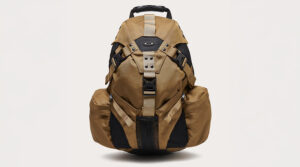
He keeps an extra pair of the gloves in a water-resistant backpack that goes on every trip Ashley takes. “My backpack has been to Hawaii twice and Cabo twice,” he said. “I like a backpack because it has pockets. I have a dry bag, but it’s just a big open bag, so if I need to get something out, I have to take out everything.”
In his gear bag, Ashley carries Sharpie markers, waterproof Band-Aids, a roll of rigging tape, a handheld GPS, a handheld VHF marine radio, a pair of binoculars, a handheld compass and a handheld anemometer.
“I’ve always had two different bags, a ditch bag for the boat and my gear bag for me,” Ashley explains. The ditch bag is on his boat and has an emergency position-indicating radiobeacon (EPIRB), flares, spare water, foul weather gear and other things he might need to survive being separated from the boat.
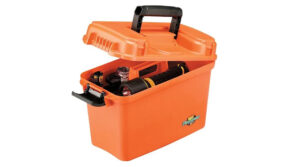
When it comes to a toolbox, start with the box itself. The number of water-resistant boxes with tops that close on gaskets has grown recently. West Marine sells waterproof boxes from Flambeau, Plano and Milwaukee among others.
Obviously, a toolbox is going to be boat specific, but some tools are more universal. “One thing many people don’t appreciate, especially if they’re new, is that any tools that open and close like pliers need to be stainless steel,” said Ashley. “If you need them and they’ve been sitting in a salt environment, you go to use a pair of pliers and they’re rusted shut, you’re screwed.”
For most boats, you’ll want three or four pairs of pliers including needle-nose and channel-lock style. Sailors like to keep a pair of linemen pliers on board because they’re good for twisting cables. For screwdrivers, Ashley includes a large flat-head that could also be used as a pry bar, a medium flathead, Phillips drivers, and one each of stubby-handled versions. A claw hammer is good to have aboard because it can be used to pry things as well.
More boat-specific items include wrenches sized for things that need to be frequently adjusted. Aboard his sailboat, Ashley said the dyneema cable that makes up the steering linkage creeps or lengthens, and needs to be tightened so he keeps wrenches sized for that task. A couple of nut drivers for working with hose clamps is also a good idea.
While a big high-capacity manual bilge pump might seem like a good idea initially, a smaller one that fits in more areas is a better one. Add a length of hose on the outlet side that can reach overboard. “The smaller it is that can still do the job, the better,” said Ashley.
He also carries a folded up coat hanger because it can be shaped for use to unclog a hose. Nearly all the water hoses on Ashley’s boat are the same size, so he keeps a length of that size hose plus double-ended male fittings to fabricate a splice if necessary.
A small selection of spare parts that should be aboard includes butt connectors, some red and black spare wire, fuses and light bulbs if necessary.
On a fishing boat, make sure you have a pair of cutters that can get through your largest hook in case one goes through a person’s hand or foot. You need to be able to cut the barb so the hook can be backed out.
If you know you have some heavy-duty metal on the boat, make sure you have something that can cut it. The rigging on Ashley’s boat had steel rods in the rigging that couldn’t be severed with bolt cutters, so he carried an angle grinder with a cutting blade.
Should the need arise for an underwater repair or gear assessment, that would require a mask and snorkel. For repairs or evaluating a situation in less-than-ideal visibility, full-face snorkel masks are gaining in popularity. They have a curved lens that gives an uninterrupted 180-degree view and they let the snorkeler breathe through his or her nose or mouth, which is helpful for novices.
Naturally, it comes down to fit. To ensure a good fit, hold the mask against the wearer’s face without attaching the strap. Breathe in through the nose, hold your breath and look around to see if the mask stays in place. Next, affix the strap to see if the fit remains comfortable and pay attention to pressure on the bridge of the nose.
Having technical sailing gloves, waterproof Band-Aids, and a waterproof toolbox onboard ensures sailors are well-prepared for the challenges of the water, combining protection, reliability, and convenience for a smoother and safer sailing experience.