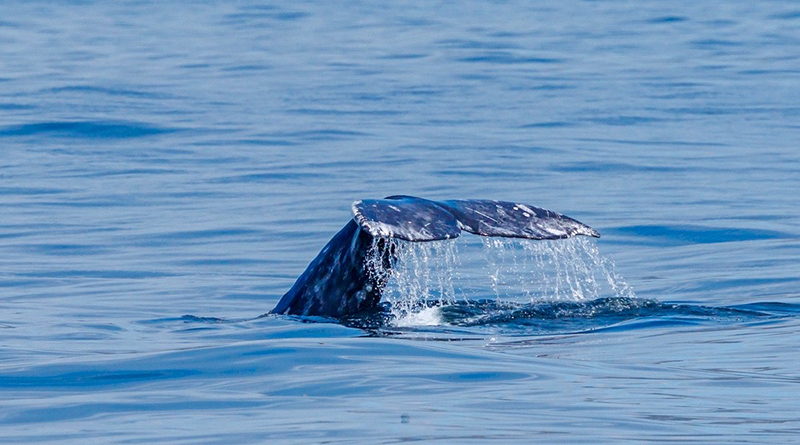
Every year, Southern California boaters and coastal communities get front-row seats to one of the most remarkable wildlife migrations on Earth. From late fall through spring, gray whales travel thousands of miles along the Pacific Coast, hugging the shoreline so closely that they can often be spotted from beaches, cliffs, and harbors. For Dana Point, a community deeply tied to whale watching, this migration is more than a natural event—it’s part of the town’s identity.
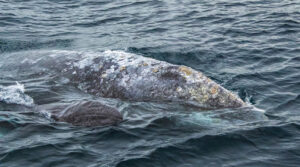
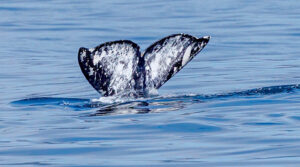
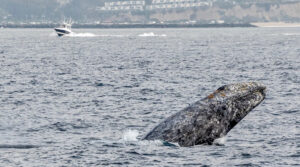
Gray whales are known for undertaking the longest migration of any mammal. Each year they make a round-trip journey of up to 12,000 miles, traveling from their feeding grounds in the icy waters of the Bering and Chukchi Seas to the warm, sheltered lagoons of Baja California, Mexico, where they calve and nurse their young. The southbound journey begins in October and November as Arctic ice forms, with the first whales reaching Southern California by December. This migration typically peaks between December and February, followed by the northbound return from February through May. During both legs of the journey, the whales pass right by Orange County’s coastline, giving Dana Point a reliable window into this oceanic odyssey.
What makes Dana Point so special for whale watching is geography. The headland that gives the harbor its name juts prominently into the Pacific, creating a natural observation point and bringing whales closer to shore than in many other places along the coast. Add in calm harbor waters, a fleet of experienced whale-watching operators, and a community that has built festivals and traditions around the migration, and you have one of the best places in the world to witness the gray whale’s journey.
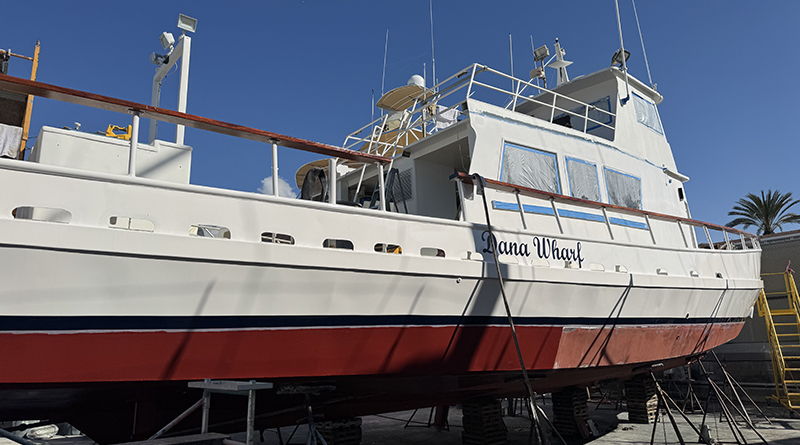
The roots of whale watching in Dana Point trace back to Don Hansen, a pioneering sportfishing captain, founder of Dana Wharf Sportfishing, and widely regarded as the “father of whale watching” in Orange County. His legacy extends beyond sportfishing; Hansen helped transform Dana Point into a hub for responsible whale watching, championing marine education and conservation. Through decades of dedication, he built a community around the harbor, leaving behind a legacy that continues to connect people to the ocean and its whales.
“My father started whale watching back in the 1960s, when it was just an idea to take schoolchildren out to see the gray whales off the San Clemente Pier,” said Donna Kalez, Hansen’s daughter and co-owner of Dana Wharf Sportfishing & Whale Watching. “When he moved his operation to Dana Point Harbor in 1971, we became the first business to open here, and right away we began public whale-watching tours. He also started the very first Festival of Whales that same year, which continues to this day as the longest-running festival of its kind in the world.”
Kalez explained that in the early years, her father donated all proceeds from the school whale-watching trips back to local teachers, a gesture that underscored his passion for giving back to the community. “He never kept any of the money—it was always about sharing the love of the gray whale,” she said. “If it hadn’t been for Don Hansen, none of this would have happened. Today we’re recognized all over the world as the Whale Watching Capital of the World and as a Whale Heritage Area.”That legacy continues through the Hansen family today. Kalez has chaired the Dana Point Festival of Whales for the past 25 years, and she, along with her brother Mike, co-owner of Dana Wharf, who also established The Gulf of Catalina Gray Whale Preservation and Education Foundation along with Donna and their father Don, to ensure schoolchildren still have access to the water.
“Because of funding challenges, schools can’t always afford field trips anymore,” she said. “Through the foundation, we take out about 3,000 kids a year, giving them the same opportunity my siblings and I had growing up.”
For local captains and anglers, spotting gray whales is as much a part of winter as chasing rockfish or hoop-netting for lobster. The slow, rolling spouts and the whales’ tendency to hug the shoreline mean that even small private boats leaving Dana Point Harbor often find themselves alongside these leviathans. For charter operators, the gray whale season is the heart of their calendar, drawing families, school groups, and tourists eager to see the giants up close. The migration is also the centerpiece of the annual Festival of Whales, which blends education, conservation, and community celebration.
The whales themselves tell a story of resilience. Once hunted nearly to extinction, gray whale populations have rebounded to healthy levels, though biologists continue to track their numbers carefully as climate change, shifting prey availability, and human impacts reshape the ocean. Whale-watching crews in Dana Point contribute valuable observations to this science, providing insights into calf counts and migration timing each season.
For boaters, the migration is a reminder that Southern California waters are more than a playground—they are a living marine corridor stretching from the Arctic to Baja. Respectful viewing practices, like maintaining safe distances and reducing speed near whales, ensure these encounters remain sustainable for future generations.
As winter gives way to spring, Dana Point’s waters will again fill with migrating whales, some traveling north with newborn calves by their side. For the community that proudly calls itself the Whale Capital of the World, the migration is more than just a seasonal event—it is part of its history, its identity, and its future.