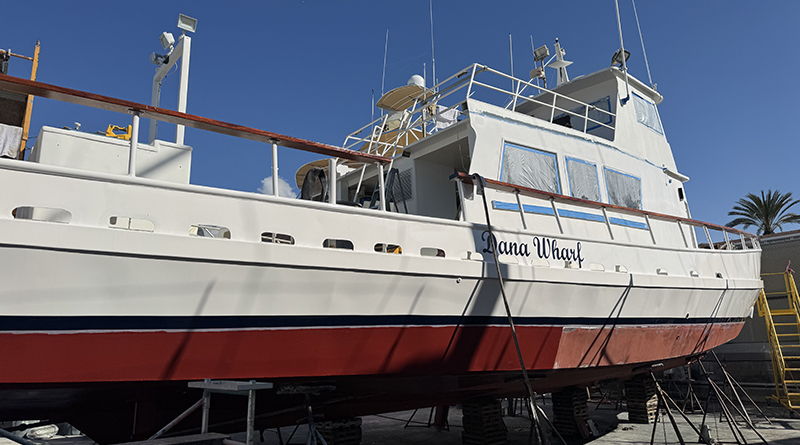
SAN DIEGO, Calif. — Long before the San Diego Bay became a recreational hub and a backdrop for tourists strolling through Seaport Village, it was the heartbeat of one of the city’s most powerful industries: commercial tuna fishing. Known throughout much of the 20th century as “The Tuna Capital of the World,” San Diego once boasted two of the nation’s three largest tuna canneries, with thousands of fishermen launching daily from what is now known as Tuna Harbor.
The first cannery opened in 1909, marking the beginning of an industry that would transform San Diego’s economy and cultural landscape for decades. By the 1960s, tuna fishing had become the city’s third-largest industry, employing nearly 40,000 people across the commercial fleet, canneries, and supporting industries. Generations of families built their livelihoods around the ocean, with docks teeming with vessels, nets, and crew unloading massive catches for global distribution.
Today, while San Diego’s tuna fleet now operates primarily in the distant waters of the Western Pacific due to evolving environmental regulations, economic shifts, and global competition, the legacy of Tuna Harbor endures. Modern fishermen still sail from its docks in pursuit of swordfish, lobster, and sea urchins, continuing a tradition rooted deeply in the city’s maritime heritage.
Located in the heart of downtown San Diego, adjacent to the south side of the G Street Mole, Tuna Harbor Basin includes several facilities that still support commercial fishing operations. These include Tuna Boat Pier, Fish Harbor Pier, Fish Market Wharf, and three floating docks designed to accommodate vessels both home-ported and in transit.
Tuna Boat Pier, constructed in 1977, stretches 900 feet from the southwestern tip of the G Street Mole. Nearby, Fish Harbor Pier — built in 1980 — extends 400 feet into the bay and serves as a key point of access for commercial vessels adjacent to Seaport Village. Offloading operations are handled at the Fish Market Wharf, which dates back to 1971 and features a 100-foot-long by 50-foot-wide platform equipped with a jib crane to handle daily catches.
These piers were intentionally designed for large vessels, particularly those exceeding 90 feet in length or those passing through the port temporarily. In addition to berthing space, they serve as vital staging grounds for the storage and maintenance of gear including lobster traps, crab pots, and expansive fishing nets.
Three floating docks round out the harbor’s infrastructure, built to accommodate home-ported commercial fishing boats under 90 feet in length. Dock No. 3, built in 1977, received significant upgrades in 2003, including new pontoons and steel framing. Dock No. 2, with its timber deck on plastic tubs, was constructed in 1983, while Dock No. 1, the newest of the trio, was completed in 1990 using concrete floats filled with polystyrene.
The story of Tuna Harbor is a story of endurance — of a fleet and a city that once fed the nation, and of a community that continues to honor its connection to the sea. While the skyline and economy of San Diego have evolved, the echoes of the past remain anchored in the pilings and piers of this historic waterfront.
Today, Tuna Harbor stands as both a working facility and a living monument to the city’s fishing heritage, reminding all who pass by of the generations of hardworking mariners who helped shape the port into what it is today.