This article could easily take up four pages of this newspaper if we went into the logistics of assembling a galley and all the mounts we can hang for glassware storage, plate storage, and cutlery, but for the sake of space, I’m going to assume that you already have the space savers nailed to the walls.

Today, we’re cooking a Christmas dinner in your galley, and not just any dinner, but one that would make both Santa and your sea mates proud. I have created a classic menu designed to satisfy everyone on board, from your pickiest eater to the family member who insists on carving the roast while the boat rocks slightly at anchor. This menu keeps tradition alive while being simple enough to pull off in a compact marine kitchen.
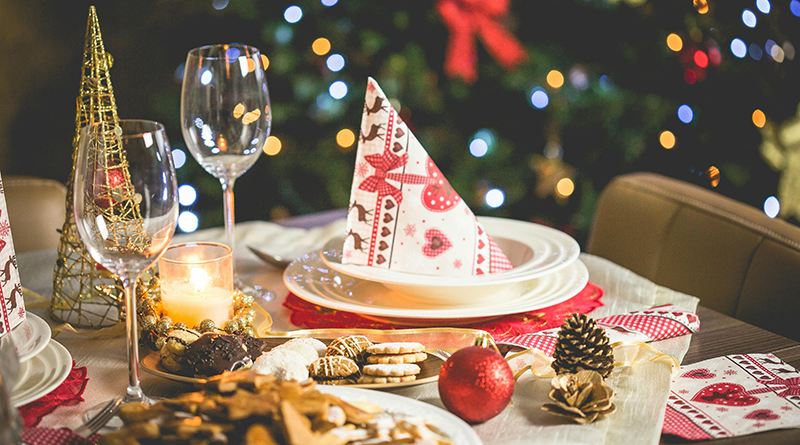
For the sake of keeping your countertops from overflowing and your sanity intact, I’ve designed your galley setup around the meal we’re cooking. You will be making a full Christmas dinner from start to finish, complete with glazed ham, prime rib, dinner rolls, scalloped potatoes, creamed spinach, pecan pie with vanilla ice cream, and a toast with red wine and sparkling cider to finish the evening. The dishes are timeless, the methods straightforward, and the cleanup (with the right tools) surprisingly manageable.

Let’s start with the centerpiece of any Christmas meal: the meat. You can choose between a glazed ham or a prime rib, depending on which crew members you are feeding. Both can be cooked beautifully in a marine oven, such as a two-burner gimbaled propane range. This type of stove is a galley classic because it combines practicality and safety in one compact design. It has an oven for roasting and burners for sides, all while balancing perfectly at sea. It may not be a land-based double oven with digital temperature probes and convection fans, but it gets the job done with surprising precision. The stainless steel finish keeps it looking sharp and easy to clean, while the slide-away door saves precious space.
For the ham, you’ll want to place it in your roasting pan with a rack, allowing air to circulate evenly and the glaze to caramelize beautifully. The glaze can be a mixture of honey, brown sugar, and maple syrup, simmered in a small saucepan on your cooktop or in an electric kettle if you prefer a hands-off approach.
Once it begins to bubble and thicken, pour it over your ham in layers, allowing each coat to set before adding the next. If you’re going for the prime rib, the same roasting pan works perfectly. Season the meat generously with salt, pepper, and your favorite herbs, and keep your meat thermometer nearby to ensure it reaches the perfect temperature. It’s the kind of cooking that rewards patience, and there’s something satisfying about seeing that golden crust form while the scent fills the cabin.
If your oven is smaller than average, a portable grill, such as a stainless steel marine gas grill mounted on your stern rail, can be a game-changer. With a grill like that, you can brown the outside of your roast to perfection before transferring it to your oven to finish cooking. It also doubles as a place to warm your dinner rolls if you’re running out of oven space, which, on a boat, is almost guaranteed.
Your side dishes are where the galley truly comes alive. The scalloped potatoes can be baked in a medium casserole dish that fits neatly in your oven beneath the roast, or they can be prepared earlier and reheated if space is tight. The creamy mixture of sliced potatoes, cheese, and cream requires only a saucepan for melting the ingredients together before pouring them into your baking dish. A small, sturdy whisk and wooden spoon are essential for stirring without scraping your cookware. Non-slip cutting boards will make slicing potatoes easier and safer, especially when the boat shifts slightly underfoot. The aroma of bubbling cheese and baked cream will fill your cabin with that unmistakable holiday warmth, proving that comfort food tastes even better when paired with sea air.
Next comes the creamed spinach, a dish that manages to make vegetables feel festive. You can make it easily on your cooktop using one of your stainless steel saucepans. A two-burner setup is ideal: one burner for melting butter and cream, and the other for wilting spinach. Add salt, pepper, and a touch of nutmeg if you want to impress your guests. Serve it in a small bowl or shallow platter that fits easily on your table without crowding everything else. It’s a side dish that feels indulgent but takes up very little galley space.
Dinner rolls can be warmed in your oven once the main course is done. If you are running out of room, wrap them in foil and place them on your grill while the meat rests. The foil keeps them soft, and the gentle heat gives them a golden finish. Use your oven mitts or heat-resistant gloves to handle the pans safely. Even though your galley might be compact, there’s something almost cozy about managing multiple dishes in a space just big enough for one determined cook.
Once the savory portion of the meal is underway, your refrigerator or cooler comes into play. This is where the magic of organization really counts. Your fridge should be pre-stocked with butter, cream, eggs, and, of course, the ingredients for dessert. For this menu, that means a pecan pie and a pint of vanilla ice cream. You’ll want a pie pan that fits comfortably in your oven, along with mixing bowls for whisking together the pie filling. Pecan pie may look intimidating, but it’s one of the most forgiving desserts around. Once baked, it sets perfectly on a cooling rack, filling the air with toasted sweetness that complements the aroma of your roast. Keep the ice cream tucked safely in the freezer section of your fridge or in a cooler surrounded by ice packs.
When it is time to serve dessert, small bowls or dessert plates work best for space-saving presentation. Even if you’re anchored in Avalon, a slice of pie with melting vanilla ice cream will taste like something from a storybook Christmas dinner.
No holiday feast is complete without a proper toast. Red wine and sparkling cider are staples for this menu. If you have magnetic glasses designed for marine use, they’re perfect for keeping drinks steady even if the water gets a little choppy. Stemless glasses are also a great choice for boats because they’re harder to tip over and easier to store. A small carafe or pitcher can hold your sparkling cider, ready to pour when everyone gathers at the table.
Now, let’s talk about the gear that ties everything together. A good set of nesting pots and pans is one of the smartest investments a boater can make. These sets are designed specifically for marine galleys and store compactly in less than half a cubic foot of cabinet space. A ten-piece stainless steel set with removable handles will handle every cooking task in this meal, from boiling cream to searing meat. The non-stick surfaces make cleanup easier, and the even heat distribution ensures your potatoes cook evenly and your glazes reduce beautifully.
Your power supply is another unsung hero of this operation. An inverter or generator keeps your essential appliances running smoothly, especially if you are away from shore power. A 750-watt inverter can handle small appliances like your kettle or microwave, while a compact generator provides enough energy to run your refrigerator, oven, or lights for hours. The key is efficiency, balancing power consumption with convenience so that your holiday dinner does not trip the breaker mid-glaze.
Once the cooking is done, presentation matters. The beauty of marine-grade tableware is that it’s both practical and attractive. Unbreakable melamine plates or bamboo dinnerware sets are ideal for serving, and stainless steel flatware holds up to both salt air and years of use. A sturdy serving platter or shallow bowl can hold your ham or prime rib, while smaller plates handle the sides. Keep everything within easy reach but arranged neatly; a well-set table in a galley feels just as festive as one in a dining room.
After the meal, the real work begins — cleaning up. Fortunately, a few compact supplies can make this much easier. A small bottle of biodegradable dish soap is safe for the ocean and kind to your hands. Quick-drying scrub sponges, microfiber towels, and a collapsible drying rack keep cleanup efficient and space-friendly. Trash and recycling bags should always be on hand, as it is amazing how quickly packaging, foil, and napkins add up after a feast.
Now, if you’re really in the holiday spirit, imagine this meal served as your boat bobs gently in a quiet cove. The sun dips below the horizon, lights twinkle along the shoreline, and the air carries that faint chill that reminds you it’s winter — even if the only snow is the foam at the crest of a passing wave. Your galley smells like roasted meat and sweet glaze, your table is set with flickering LED candles, and your crew is laughing, plates full, glasses raised. It is proof that Christmas magic does not depend on square footage; it depends on the effort and joy that goes into sharing a meal.
Every appliance and utensil in your galley earns its place on a night like this. The oven that roasted the ham doubles as a warmer for dessert. The stovetop that simmered the glaze becomes the station for brewing coffee. The refrigerator hums quietly, storing leftovers for tomorrow’s breakfast sandwiches. The cookware stacks neatly into its cabinet, the tableware rinses quickly, and soon the galley looks just as tidy as when you began.
Cooking aboard may never rival a sprawling kitchen, but there is something about it that feels more personal. The rhythm of cooking at sea — balancing a saucepan as the boat shifts slightly, listening to waves lap against the hull as you stir creamed spinach — turns an ordinary meal into an experience. It’s not just about the food; it’s about the memory of preparing it in a space where every square inch matters.
Even the cleanup has a certain satisfaction. Once the dishes are done and the counters are wiped, you can settle into the quiet of the cabin with a final glass of wine. The hum of the generator fades, the lights from nearby boats reflect softly across the water, and you can feel a small sense of accomplishment knowing that you managed to create a Christmas feast in a kitchen no bigger than a hallway.
For those who truly want to elevate their galley cooking, there are endless ways to customize the setup. Glassware can hang neatly from magnetic mounts, plates can be stored in fitted racks, and cutlery can be organized in slide-out drawers designed for marine use. Space is the greatest luxury on a boat, and the best galleys are those that turn efficiency into an art form. But even if you keep things simple, the essentials listed above are enough to make a proper holiday meal feel effortless.
When you think about it, cooking Christmas dinner aboard a boat is the perfect metaphor for boating itself. It takes planning, adaptability, and a willingness to embrace the unexpected. There may be a little improvisation involved, and perhaps the oven runs a few degrees cooler than it should, but by the time you sit down with your plate, none of that matters. The laughter, the aromas, and the sense of accomplishment fill the cabin as completely as any holiday spirit.
There’s something timeless about bringing tradition to the water. The clink of plates, the sound of corks popping, and the warmth of shared food remind us why we gather together in the first place. Even with the challenges of limited counter space and small appliances, the experience of cooking a holiday meal in your galley feels rich, satisfying, and uniquely your own.
From the first slice of ham to the last spoonful of pie, the entire meal is a reminder that the joy of Christmas can fit anywhere — even within the cozy confines of a boat galley. It might not have the sweeping grandeur of a kitchen on land, but it has something better: the sound of waves, the glow of navigation lights, and the kind of peace that only comes from being surrounded by water and good company.
If you can make all of this happen in a few square feet of space, you can do just about anything. After all, there’s no rule that says Christmas dinner has to be served on land. The spirit of the holiday follows wherever there’s laughter, good food, and a crew willing to share it. And that, more than any perfectly plated roast, is what makes a galley Christmas truly unforgettable.
Editor’s Tip from an editor who loves to cook: If you want to keep the magic going after dinner, chill the leftover sparkling cider for a holiday brunch mimosa, or repurpose any remaining ham for breakfast sandwiches on deck. A splash of red wine in the gravy pan also makes an excellent base for tomorrow’s stew. The best galley cooks know that every meal on the water is a second chance to make something even better the next day.