For many people, sailing begins the same way: watching a boat glide across San Diego Bay and thinking, “I wish I knew how to do that.”
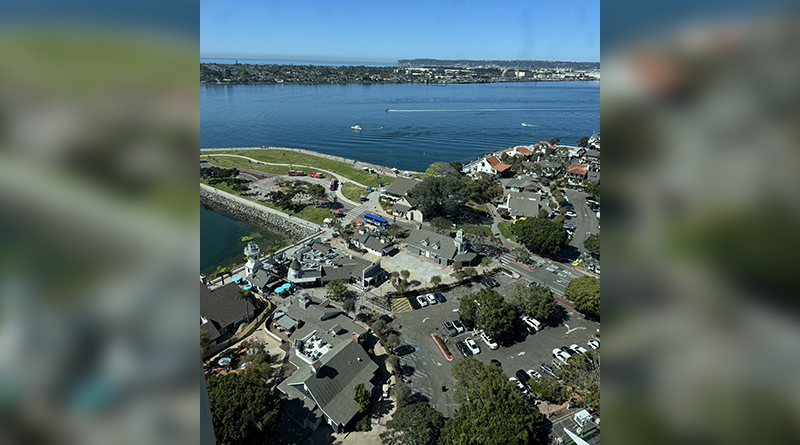
What surprises many newcomers is how accessible sailing has become. In San Diego, getting started no longer requires buying a boat, finding a slip, or spending years figuring things out alone. Across Harbor Island and San Diego Bay, a growing network of sailing schools, clubs, charter operations, and certification programs has created multiple pathways for people to go from complete beginner to active sailor.
That variety has become part of San Diego’s maritime identity.
Unlike boating communities that tend to revolve around ownership, San Diego has developed into a place where people can learn, practice, charter, race, and build confidence on the water before ever purchasing a vessel of their own.
One option for those looking for a more personalized experience is Learn To Sail San Diego, a Harbor Island-based sailing school built around hands-on instruction and American Sailing Association (ASA) certifications.
Rather than operating like a traditional classroom program, Learn To Sail San Diego emphasizes experiential learning through private and small-group instruction. Students begin with introductory keelboat concepts and can progress into more advanced cruising and catamaran certifications depending on their goals.
Its Harbor Island location places students directly onto San Diego Bay, offering protected learning conditions while still providing relatively quick access to more advanced sailing environments.
One of the elements that distinguishes the program is its boutique approach. Training is designed to be more customized than large-format instruction, allowing students to move at different speeds and tailor experiences around their sailing ambitions.
The school also incorporates liveaboard opportunities, allowing participants to remain aboard during training and, in some cases, incorporate destination-style experiences that expand beyond the bay itself.
That flexibility reflects a broader trend in sailing education where instruction increasingly overlaps with travel, lifestyle, and real-world cruising preparation.
For people interested in a model that emphasizes access rather than ownership, Harbor Sailboats takes a slightly different approach.
Operating in San Diego since 1969, Harbor Sailboats combines sailing instruction with club membership and shared fleet access, creating an environment designed to help members become active sailors rather than occasional students.
Their philosophy centers on removing one of sailing’s biggest barriers: the commitment and expense of boat ownership.
Instead of purchasing, storing, insuring, and maintaining a vessel, members gain access to maintained sailboats while participating in lessons, rentals, club events, and organized sailing activities.
Instruction follows the ASA certification pathway and extends beyond beginner keelboat classes into coastal cruising, navigation, docking techniques, catamaran instruction, and advanced cruising certifications.
Beyond education, Harbor Sailboats also incorporates members-only rentals, bareboat charter opportunities, seasonal racing programs including Capri 22 events on San Diego Bay, and flotilla-style experiences for sailors looking to expand beyond local waters.
That combination gives participants the ability to gradually build experience while becoming part of a broader sailing community.
For sailors seeking perhaps the broadest combination of education, chartering, and club access, Marina Sailing San Diego offers another pathway.
Founded in 1962, Marina Sailing has grown into one of Southern California’s larger sailing organizations and operates a sizable fleet across multiple locations. The company was built around a relatively simple concept: sailing should not be limited to people who already own boats.
Its San Diego operation on Harbor Island combines instruction with club membership, charter opportunities, and destination experiences.
Students can begin with introductory ASA certifications and continue into advanced coastal cruising and navigation programs, while members gain access to sailboats, catamarans, and powerboats without ownership responsibilities.
The operation also extends beyond local waters through flotilla and destination experiences that introduce members to sailing environments far beyond San Diego Bay.
Taken together, these different approaches highlight something distinctive about San Diego’s waterfront.
Not everyone arrives already knowing how to sail.
Some arrive because they’ve always been curious. Some want to charter someday. Some are preparing for cruising adventures. Others simply want a different way to experience the water.
San Diego’s sailing community has created room for all of them.
And in a city built around the harbor, that may be one of its most defining characteristics: it isn’t simply a place where people keep boats. It continues to be a place where people become sailors.