


I’ve spent more than 35 years working on and inside boats. During that time, I’ve seen my fair share of cooling system failures, and I can tell you — there’s never a good time for an engine to overheat. The Log has previously covered saltwater-cooled engines in its article “Clues From Your Boat: Understanding and Maintaining Your Boat’s Cooling System,” but I want to take a deeper dive into some often-overlooked issues.
Dave Townsend image
The consequences of an unmaintained cooling intake system and neglected intake screens can be severe. With cooler temperatures in the air, overheating might seem like an odd problem to worry about, but trust me, it’s one of the most common and avoidable engine failures boaters face. Keeping the cooling intake clear and properly maintained isn’t just routine maintenance — it’s what stands between you and an expensive repair bill, or worse, getting stranded on the water.
Saltwater cooling intakes are exposed to marine growth every time your boat sits in the water. Barnacles, mussels, and other organisms love to take up residence in your intakes, restricting water flow and causing gradual performance issues that can lead to full-blown overheating. If your boat spends long periods sitting idle, this problem becomes even more pronounced. I’ve seen engines fail simply because water wasn’t flowing properly due to clogged intakes. Without the right amount of cooling water, an engine’s temperature can spike rapidly, warping cylinder heads, melting pistons, and in extreme cases, leading to complete engine failure.
Dave Townsend image
One of the best ways to stay ahead of this problem is by hiring a reputable dive service. A good diver will remove screens from the bottom of the boat and clean through-hull openings and water intake valves to ensure cooling water flows freely. Since most divers perform this work while you’re not on the boat, I always recommend working with someone you trust. Check in regularly and confirm that the work is being done as billed. A properly maintained intake system is your first line of defense against overheating, but boaters should also take an active role in monitoring their cooling system beyond just hiring a diver.
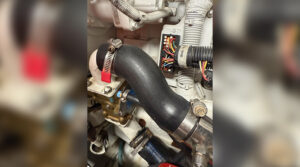
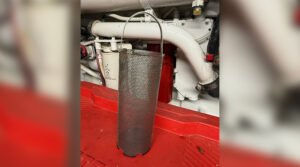
A good habit to develop is inspecting and cleaning hoses and strainers regularly. I always tell boaters that if they’re comfortable enough to turn a wrench, they should get familiar with removing hoses and checking for blockages. Start by shutting the through-hull valve completely before loosening hose clamps and wiggling the hose free. Hoses that have been clamped tightly for long periods can create a seal around the fitting, making them tough to remove. You may need to give them a good pry to get them off, but once they’re free, inspect them closely. A partially blocked hose can be just as problematic as a completely clogged intake.
Dave Townsend image
The engine room environment is unforgiving, and cooling hoses take a beating. Over time, exposure to intense heat causes hoses to become brittle, increasing the likelihood of cracks and leaks. Even a small hole in a hose can reduce cooling efficiency and eventually lead to overheating. The damage might not be obvious at first, but I’ve seen plenty of cases where a small pinhole leak caused gradual overheating that went undiagnosed until the engine finally gave out. Regular inspections and timely hose replacements prevent this from becoming an issue.
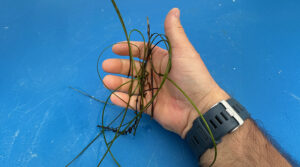
Setting a maintenance schedule and sticking to it is key to keeping your cooling system in top shape. Cleaning strainers should be a regular task — every two months is a good baseline, but if you use your boat frequently, you may not need to clean them as often. The more a boat is used, the less time marine growth has to accumulate. On the other hand, a boat that sits in the marina is a magnet for eelgrass, plastic debris, and kelp, all of which can clog the strainer and restrict water flow. If you’re not checking and cleaning your strainer regularly, you’re gambling with your engine’s cooling system.
Dave Townsend image
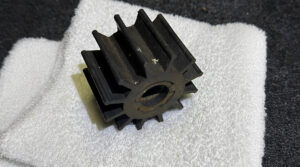
Another critical component on which to keep an eye is the raw water pump impeller. This small but essential part pushes cooling water through the engine, and if it fails, your engine will overheat almost immediately. The rubber vanes of the impeller wear down over time, and if they break off, the fragments can block cooling passages. Keeping track of time-in-service records for impellers is just as important as changing your oil. Many overheating cases I’ve seen were due to neglected impellers that simply weren’t moving enough water to keep the engine cool.
While keeping the raw water system clean is crucial, don’t forget about the internal cooling system as well. Changing engine coolant according to the manufacturer’s recommended intervals ensures that the coolant retains its heat-regulating properties. Just like oil, coolant degrades over time, losing its ability to prevent overheating and corrosion inside the cooling passages. Neglecting coolant changes can lead to buildup inside the engine, reducing efficiency and making it harder for the system to keep temperatures under control. Treating coolant changes with the same priority as oil changes is a simple way to avoid preventable engine issues.
For boaters who aren’t comfortable handling these maintenance tasks themselves, having a reliable marine mechanic is invaluable. A knowledgeable mechanic will understand the unique challenges of saltwater cooling systems and can identify problems before they turn into expensive repairs. Just like finding a good dive service, working with a trusted mechanic ensures that your boat stays in top shape. Scheduling regular inspections and maintenance with a professional is one of the best investments a boat owner can make.
An overheating engine is more than just an inconvenience — it’s a serious problem that can lead to costly repairs and dangerous situations on the water. Fortunately, with the right maintenance routine, it’s completely avoidable. Keeping intakes and strainers clean, replacing aging hoses, tracking impeller wear, and maintaining the internal cooling system all play a role in preventing overheating. A well-maintained cooling system not only extends the lifespan of an engine but also ensures that every trip on the water is smooth and trouble-free. As someone who has spent decades working on boats, I can confidently say that a little preventative maintenance goes a long way. Don’t wait for an overheating issue to catch you off guard — stay ahead of the problem and keep your boat running cool.
One Response
Excellent article. I appreciate the advice