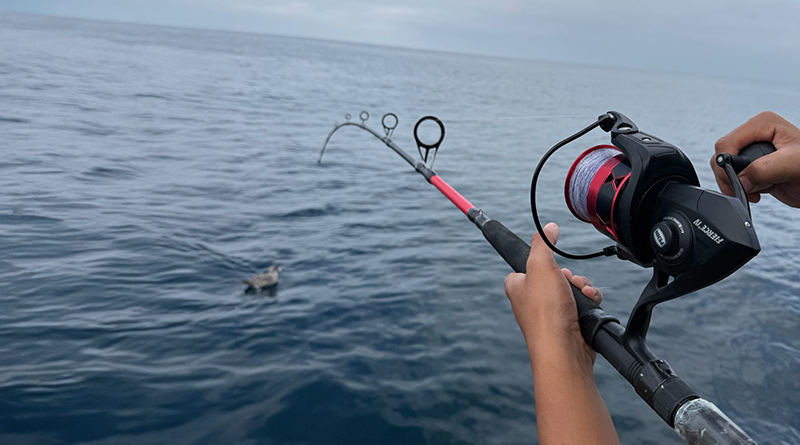
Fishing has seen its share of innovations over the years, from graphite rods to braided line to the unfortunate rise of Bluetooth speakers on boats that attract the worst DJ on deck. But nothing has rocked the angling world quite like the boldest technique sweeping docks and piers everywhere: fishing with your reel upside down. Yes, it’s true. Real people do this, proudly marching into the world with their spinning reels sitting on top of the rod like the sunglasses their wearing upside down on their head. And maybe, just maybe, the rest of us have been doing it wrong the whole time. After all, angling traditions are just long standing habits passed down by people who were probably as confused as we are now. Perhaps none of our fishing forefathers ever had the courage to flip the reel over and discover a higher truth.
Advocates insist there are genuine advantages to the upside-down method, even if critics argue it destroys line management, hook sets, and self-respect. Supporters claim it offers a full body workout as you relearn how to reel backwards, an instant excuse for not catching fish, and the kind of unshakable confidence that comes from doing something so publicly wrong that it loops back around into boldness. And at the very least, it provides entertainment. Every fishing trip needs comic relief, and nothing breaks tension like a grown adult casting with the gusto of a confused toddler holding a broomstick.
Mastering the technique begins with commitment. Make sure you’re comfortable having a lot of attention on you. Personally, I don’t want anyone speaking to me when I fish, so I have my rod and reel set up the correct way. Or maybe at this point I should call it traditional and not correct.
Anyway, you start by turning your reel skyward and ignoring every instinct you have developed since childhood. Casting will feel strange. People will stare. A kid may ask if you need help. But persevere. You are stronger than I. Reeling backwards at first feels like watching an otter attempt mechanical engineering (are you picturing it now? How cute, huh), but over time, you begin to find a rhythm. If you hook a fish, celebrate loudly and immediately, before anyone can process the chaos of your reel seat or the odd choreography of your hands.
The social experience may be the most memorable part. Fishing is a community sport, and nothing brings that community together faster than witnessing something spectacularly incorrect. The moment you flip that reel over, onlookers will gather like seagulls spotting a dropped sandwich.
Someone wearing a visor will inevitably step forward to say, “You know that’s upside down, right?” This is your moment. Smile, nod, and reply with absolute confidence, “I am built different.” Whether they admire you or slowly back away isn’t important. You’ve made an impression. Always remember, there’s a difference between “fishing” and “actually catching fish.” And if you’re confident enough they’ll get the hint.
Efficiency has little to do with it. Upside down fishing is not about catching more fish. It’s about embracing the pure silliness that sometimes gets lost in a sport obsessed with technique, gear ratios, and the never-ending quest for the perfect knot.
Don’t fall victim to the judgmental norms that these anglers have created because they’re always trying to out-best each other. It is a reminder that fishing is supposed to be fun. And if flipping your reel upside down brings joy, confusion, and a story everyone will be telling for months, then perhaps it is the greatest innovation the angling world has seen in years.