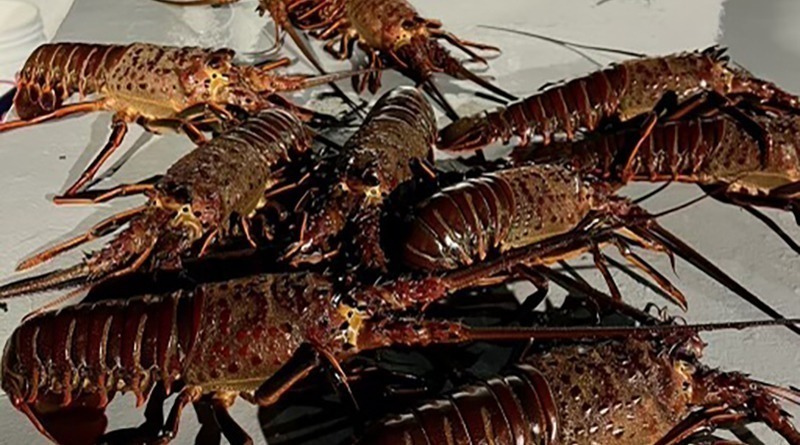
The California spiny lobster is an important species in both recreational and commercial fisheries, valued for its firm, sweet tail meat and the challenge of catching it. The 2025/26 recreational season will open at 6:00 p.m. on Friday, September 26, 2025, and close at 11:59:59 p.m. on the first Wednesday after March 15, 2026. These dates are set to protect the species during its reproductive cycle, opening after most spawning has occurred and closing before lobsters return to shallow water to spawn again. Although a small number of egg-bearing females are caught each year, this schedule provides strong safeguards to maintain a sustainable population.
Fishing for lobster in California comes with a detailed set of regulations designed to ensure sustainability. Every recreational angler must have both a California sport fishing license and a Spiny Lobster Report Card issued by the California Department of Fish and Wildlife. Those fishing south of Point Arguello in Santa Barbara County must also obtain an Ocean Enhancement Validation unless operating under a one- or two-day sport fishing license. Report cards can be purchased through CDFW’s Online License Sales site, by phone, or at many local tackle shops. Bag and possession limits are strictly enforced—no more than seven lobsters per person may be taken or possessed at any time, whether they are fresh, frozen, or preserved. This rule applies not just on the water, but also at home; if you already have seven lobsters in your freezer, you must consume or give them away before catching more.
Equally important is the minimum size limit. All lobsters must have a carapace length of at least 3¼ inches, measured in a straight line from the rear edge of the eye socket to the back edge of the body shell. To avoid mistakes, anglers are encouraged to use a dedicated lobster gauge, which is more accurate than a tape measure or ruler. Any lobster that does not meet the minimum size requirement must be released immediately. Gear restrictions vary depending on location and method. From a public pier, anglers may use up to two hoop nets, while those fishing from a vessel may have up to five hoop nets per person, with a maximum of 10 nets per boat regardless of crew size. Divers — both free and scuba — may take lobsters only by hand, without assistive devices such as tickle sticks, and any lobster caught incidentally on hook and line must be released right away. In addition, hoop nets cannot be deployed south of Point Arguello during the 24 hours preceding the season opener.
The most popular areas for recreational lobster fishing are spread across Southern California’s coastline and islands. In the 2023/24 season, Catalina Island accounted for nearly 15 percent of reported recreational catch, followed by San Diego Bay, Long Beach/Middle Breakwater, Point Vicente to King Harbor, and Santa Cruz Island. Other productive spots included Zuniga Jetty, the Dana Point jetties, and the stretch from Santa Monica to Malibu Point. Hoop netting remains the dominant method, responsible for almost half of the reported catch last season, with free diving and scuba diving close behind. When it comes to efficiency, scuba divers averaged the highest catch per trip, followed by rigid hoop nets, free diving, and traditional hoop nets.
Techniques for catching California spiny lobster vary, but all require preparation, patience, and precision. Hoop netting is a favorite for both pier and boat anglers, involving baited nets lowered to the seafloor in rocky or reef areas where lobsters hide. Oily baits such as mackerel tend to be the most effective, and many anglers find their best success during tide changes when lobsters are actively foraging. Nets should be checked regularly, typically every 20 to 40 minutes, to keep lobsters from escaping and to refresh bait as needed. For divers, the process is more hands-on. Both free divers and scuba divers slip into the water after dark, scanning the seafloor with lights to locate and grab lobsters by hand. Quick reflexes are essential, as is a careful eye for size limits to ensure compliance with the law.
In recent years, kayak-based lobster fishing has gained popularity, offering anglers stealth and access to shallower, hard-to-reach waters where larger vessels cannot navigate. Kayaks provide unique opportunities but also come with limitations in storage space and stability, requiring careful packing of essential gear, proper lighting, and a secure way to store the catch without upsetting balance. Regardless of the platform, much of the lobster hunt takes place at night, when these nocturnal crustaceans leave their hiding places to feed. The nighttime setting adds a unique dimension to the experience, with glow sticks marking hoop net buoys, headlamps cutting through the darkness, and the distant shimmer of harbor lights reflecting on the water. There is a distinct thrill in hauling a net to the surface and spotting the flash of orange that signals a legal spiny lobster ready for the measuring gauge.
Safety is a constant concern during nighttime outings. Anglers must ensure they have reliable lighting, visible markers, and personal flotation devices. For boaters, communication devices are essential, while kayak anglers should take extra care to remain visible to larger vessels. The cooler fall and winter months also make proper clothing and dry gear an important part of any trip, as staying warm can mean the difference between a productive night and an early return to shore.
Once a lobster is caught, proper handling is critical for maintaining its quality. The best practice is to keep lobsters alive until cooking by storing them in a ventilated cooler with damp towels or seaweed, or in a live well if available. They should not be stored directly on ice for long periods, as fresh water can kill them and negatively affect the flavor and texture of the meat. Measuring each lobster immediately after capture is essential, not just to comply with regulations, but also to avoid unintentional possession of undersized specimens that could result in significant fines.
It bears repeating: The rules that govern California’s lobster fishery are grounded in science and exist to ensure the species remains abundant. By opening the season after the majority of lobsters have spawned and closing it before the next breeding period, the state gives the population a chance to replenish. Size limits protect immature lobsters, and gear restrictions help reduce bycatch and limit damage to sensitive habitats. Bag and possession limits keep harvest levels sustainable, while the mandatory report card system provides vital data for fisheries managers. Every card submitted — whether it reports a full bag, a single lobster, or no catch at all — contributes to a clearer picture of the health of the fishery and helps guide future regulations.
For those who participate, lobster season offers far more than a meal at the end of the night. It is a tradition rooted in patience, skill, and the connection between angler and ocean. It is the satisfaction of feeling the weight of a full net, the camaraderie of fishing alongside friends under the stars, and the reward of preparing and sharing a catch that you pursued with care and respect for the resource. As this year’s opener approaches, anglers across the coast are already checking gear, reviewing regulations, and plotting their first trip of the season. With preparation, respect for the rules, and a little luck, each outing holds the potential for a story worth telling — and perhaps a lobster dinner worth savoring.