Part 1: The month of May is always good for some mixed weather — ranging from warm sunny days to straight-up cranking wind from all directions. Fortunately, for now, May has been mellow, and we’ve seen some good early spring conditions, which have been perfect for local ½-day and ¾-day boats as they target bass and rockfish.

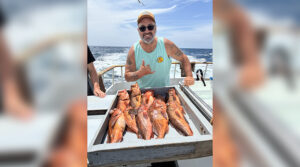
The 1/2-day scene has been a mix of rockfish, bass, sculpin, whitefish, and some really nice halibut. Water temps have been fairly consistent in the 60 to 63° realm. This sets things up nicely for the bass fishing. Typically, the calico bass like the stability factor in water temps so even with the relatively mild spring temps the calico bass have been showing some sign of life. The best bet has been using live anchovies, either flylined or fished with a light sliding egg sinker. The live anchovies have been around and available to pretty much every sport fishing landing along the coast. A live anchovy fished on a number 4 hook with 12 to 15-pound monofilament line has been perfect. Lighter lines help the anchovy look much more natural in the water and help anglers get bites. Anglers wanting to fish a sinker rig have been using 2-6oz torpedo sinkers. The sheephead, whitefish, and sculpin have been biting well too for boats fishing deeper, hard bottom structure. The best baits for the fish at or near the bottom have been squid strips and live anchovies.
The halibut have been moving in along with the grunion that make their way into the shallows to spawn. Grunion are a major food source for the halibut. But currently the season is closed on grunion so you can’t head to the beach to catch your own bait. Grunion take is closed until June, and we recommend looking at current CDFW regulations for further information.
Three-quarter-day trips have been pretty much solely targeting rockfish. Out in the deeper 100 fathom water on the 14 Mike Bank, the fishing continues to be excellent. Quality chili pepper rockfish, bank rockfish, and bocaccio rockfish have been biting well. Live anchovies fished on double dropper loops are the most common bait setups. So, sinker sizes have varied from day to day depending on conditions, but 16 to 24 oz sinkers have been adequate. Anglers choosing to use slow pitch jigs have been catching plenty of rockfish, too. Jigs in sizes from 250 to 350g have been working well with the best colors being the blues, pinks, and silvers. No real news on the bass fishing for the ¾-day boats quite yet. As we see more sunshine and warmer water temperatures, the calico bass fishing will become part of the game. But for now, it’s been all rockfish.
Boats making a longer overnight run out of Dana Point and Newport Beach have been fishing San Clemente Island. The rockfish have been the most targeted fish on these trips. Ten fish limits on the rockfish have been relatively easy for most anglers. The most common catch is nice vermilion rockfish, copper, and bocaccio rockfish. In a little shallower, the whitefish have been biting well too. Small hooks and squid strips are the best tactic for the whitefish. Up until this week, the yellowtail haven’t been a real player either. However, a few schools of fish have been located, and they just aren’t ready to bite quite yet. We’ll keep tabs on this opportunity, and hopefully, for the overnight anglers, they get some chances at it soon. Bass fishing at the island is just starting to perk up, too. Again, the need for consistent water temperatures and good weather has been the key condition factor.
Live squid at the islands is starting to dry up a bit too. As the water temperature changes and gets warmer, this bait will become less available to catch on your own if you’re at the islands. Anchovies and sardines have been fine for just about all target species.
Further up the coast at the Channel Islands, both Santa Rosa and San Miguel have been the zone for white seabass and halibut. Weather windows have been the main concern, as it’s been windy and hard to fish properly. When conditions have been right, seabass fishing has been quite good with many school-sized fish in the 10 to 15lb range being caught. Live squid has been the absolute best bet. But there are seabass being caught on white fluke soft plastic baits fished on leadheads, too. The halibut have been biting in the shallows there as well. Again, the key player in this fishery has been the windy weather. Please plan accordingly.
Part 2 provided by Log Staff:
When anchovies are in short supply, Southern California anglers may need to get creative to keep their lines tight. Enter the Zoom Super Fluke — a soft rubber lure that’s proving to be an effective alternative for targeting calico and sand bass as the water temperatures start to rise. Designed to mimic baitfish, the Super Fluke’s dark and light gray colors are particularly effective at imitating anchovies, and its 5 ¼-inch size makes it an ideal choice when sardines are just too large to attract a bite.
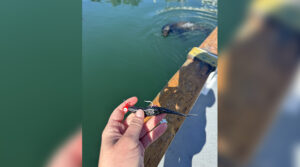
The Zoom Super Fluke features a deep belly and a forked tail that gives it a realistic swimming action, while its salt-impregnated construction helps keep fish holding on just a little longer. While primarily marketed as a freshwater lure, it’s versatile enough to handle saltwater action, especially when rigged with a one-ounce lead jig head. Red and white are popular color choices for jig heads, but anglers can experiment to see what works best in varying conditions.
Rigging the Super Fluke is simple. Attach it to a lead jig head like the Lazer Sharp Pro-V Ball Head Jig, a favorite among anglers for its premium build and ultra-sharp needlepoint hooks. Manufactured in Denver, Colorado, these jig heads feature a Pro-V Bend that increases bite-to-catch ratios by locking fish in place during the fight without requiring a heavier gauge wire. This combination makes for a deadly pairing when the bite is hot but live bait is scarce.
Fishing the Super Fluke effectively requires a little finesse. Cast the lure out and let it sink for a few seconds before beginning a slow, steady retrieve. After four or five cranks of the reel, let the lure fall again, mimicking the fluttering action of a wounded baitfish. Repeat this pattern until you get a bite or reel all the way back to the boat. It’s a simple technique but effective, especially when bass are keyed in on mid-sized baitfish.
Specifications of the Zoom Super Fluke:
Size: 5 ¼ inches
Profile: Baitfish imitator
Design: Deep belly and forked tail
Features: Salt-impregnated for added attraction
Application: Freshwater and saltwater
Whether you’re hitting the local kelp beds or drifting along a rockpile, having a few Super Flukes in your tackle box can be a game changer when anchovies are hard to come by. After all, when the bait tank is empty, it pays to have a reliable stand-in that keeps fish biting until the next bait run.