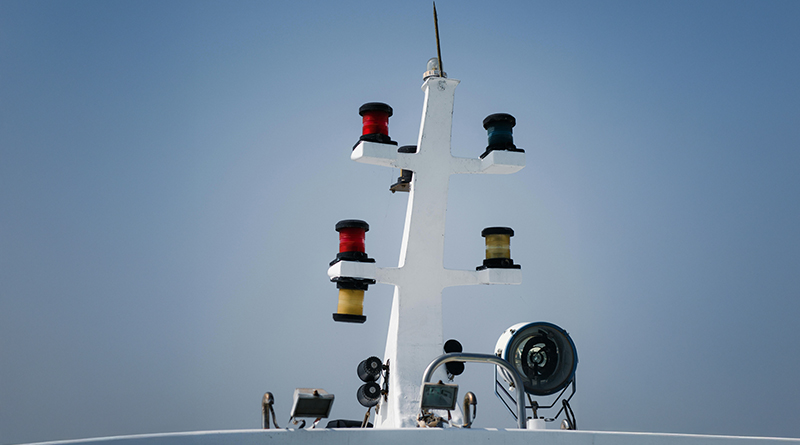
There’s a well-worn phrase among seasoned boaters that goes, “Red over white, fishing at night,” and while it may sound like maritime poetry, it’s actually a simple mnemonic grounded in hard-and-fast navigation law. For those cruising Southern California waters after sunset, the right navigation lights aren’t just a good idea, they’re a legal requirement and a crucial safety measure. From night fishermen working the kelp beds off San Onofre to kayakers exploring the harbors by moonlight, understanding and properly displaying navigation lights ensures that everyone stays visible and avoids dangerous encounters on the water.
Pexels image
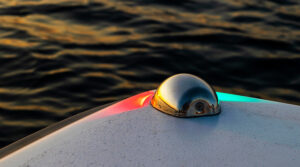
Navigation lights are mandatory for all recreational vessels operating between sunset and sunrise. Their purpose is to communicate the position, heading, and activity of a vessel to others nearby, reducing the risk of collision. The configuration depends on several factors including boat length, type, and operation. Powerboats, for example, are required to display sidelights — red on the port side and green on the starboard — that shine from directly ahead to 112.5 degrees aft. These are paired with a white stern light that shines aft and slightly forward, completing a full circle of visibility when combined with a masthead light, which covers a 225-degree arc forward. Vessels under 12 meters (39 feet) in length can opt for a single all-round white light in place of separate masthead and stern lights, while those under 20 meters (66 feet) may use a bi-color light in place of separate sidelights.
The rules are slightly different for sailboats under sail alone. Rather than using a masthead light, they rely on sidelights and a stern light, although sailboats under 20 meters have the option of using a tricolor masthead light or a bi-color light paired with a stern light. However, if a sailboat is also using its engine, even with sails up, it’s legally considered a powerboat and must display the corresponding lights. During the day, this dual-mode operation also requires the display of a black motoring cone with the apex pointed downward, indicating to others that the vessel is under power.
Smaller vessels such as rowboats, kayaks, and canoes aren’t exempt from lighting requirements either. While it may not be feasible to install a full lighting system, these vessels must still have an electric torch or flashlight on hand that can emit a white light in time to avoid a collision. Still, a portable bi-color or all-round light is a far safer and more reliable solution, especially in busy harbors where visibility matters most.
Boats at anchor are not off the hook, either. When anchored at night outside a designated anchorage, vessels are required to display an all-round white light visible from at least two nautical miles away. During daylight hours, a black anchor ball must be hoisted to signal the vessel’s status.
Just having lights isn’t enough; they must be visible from the proper distances, which vary based on vessel size. Boats under 12 meters need sidelights that can be seen from one nautical mile and all other lights visible from two nautical miles. Boats over 20 meters face stricter standards, with masthead lights needing to be seen from five nautical miles and other lights from two miles.
Proper installation and maintenance are critical. Many boaters make common mistakes when replacing or upgrading their navigation lights, particularly when switching to LEDs. Improper mounting can block visibility, while incorrect wiring or choosing lights with insufficient visibility can make the vessel non-compliant and hazardous. Even the most robust lighting system is only as effective as its placement and maintenance allow.
Fortunately, boaters in Southern California have access to a variety of well-stocked marine chandleries where they can find everything from replacement bulbs and mounting hardware to full LED light kits and portable systems. West Marine, with locations from San Diego to Newport Beach, offers an extensive selection of navigation lights that meet U.S. Coast Guard standards. In Dana Point, Pacific Edge marine is a reliable source for lighting solutions and advice tailored to coastal sailors. For those further south, San Diego Marine Exchange is a long-trusted outfitter for bluewater cruisers and sportfishing boats alike. Kelly Marine is a full yacht service in San Pedro that specializes in restorations, repairs, and equipment upgrades, while the Beacon Marine in Ventura remains a convenient and knowledgeable resource for boaters along the Southern California coast.
Replacing damaged lights should be done with care. Pole lights are commonly broken when misused as grab handles during boarding, and damaged components should be swapped with parts that match visibility requirements and mounting specifications. Many retailers now offer modular lighting systems, making it easy to replace only the part that failed without redoing the entire setup. Keeping spare bulbs, lenses, or even a backup all-round light onboard is a smart move, especially for night anglers and cruisers who don’t want to be caught in the dark.
It’s also important to remember that if your vessel is over 20 meters in length, you’re legally required to carry a copy of the Navigation Rules and Regulations Handbook onboard. That same handbook is also a valuable read for any skipper, regardless of boat size, who wants to be confident they’re operating safely and legally after dark.
Ultimately, navigation lights aren’t about aesthetics or convenience; they’re your vessel’s voice in the darkness. They tell others where you are, what direction you’re headed, and what kind of maneuvering to expect. Whether you’re trolling offshore, anchored in Avalon, or paddling near the breakwater in Redondo, properly functioning lights are essential. Before you shove off at sunset, take a few moments to double-check your system. After all, “right over white” isn’t just a catchy line; it’s how you stay safe, legal, and visible out on the night sea.