All boats, whether they’re stored on a trailer or in a marina, have the potential to damage our aquatic environment — no matter how honorable our intentions as boaters may be. Toilet waste, trash, engine oil and bottom paint can ravage our watery surroundings unless we take steps to prevent pollution in our coastal and inland waters.
Marine Sanitation Device
All vessels built since 1977 are required to have a marine sanitation device (MSD) that stores human waste in a holding tank. According to U.S. and international law, once your vessel is two miles offshore, you can dump the refuse directly into the water. However, common sense dictates that we move a few more miles out from our beautiful beaches and harbors before launching toilet waste into the ocean.
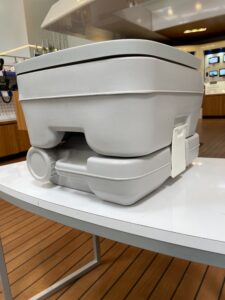
A good alternative to a holding tank is either a portable or composting toilet, neither of which requires plumbing of any kind. A portable toilet, such as the popular model from Dometic, stores waste in a separate tub that can be removed for easy disposal.
One popular model of composting toilet designed specifically for sailboats is the Nature’s Head. Only 19 inches tall and 18 inches wide, the Nature’s Head is as easy to store as it is to use. This device is designed for 60 to 80 uses, enough for a whole month before having to dispose the waste.
Another composting toilet is the Trevino Evo L, a rectangular plastic box with a capacity of 2.6 gallons of liquid waste and 2.6 gallons of solid waste that are stored in separate tanks. The Evo L measures 17 inches high, 13 inches wide by 15 inches deep.
Those of us who have older boats with no room for a holding tank can either switch to a composting toilet or simply wait until we are at least two miles offshore before flushing our toilets directly into the ocean.
Trash Disposal
Trash of all kinds — food, plastic, metal — naturally accumulates on all vessels, even in kayaks, so we need to have a plan for managing this refuse. While most of us simply collect it in plastic garbage bags, tossing them into the first dumpster we see upon returning to land, trash accumulated over a long ocean crossing requires a more organized system.
If you’re well offshore in international waters, you can dump metal, paper, wood, water-based liquids and human waste overboard to your heart’s content. But even though no one can see you dumping plastic or petroleum products, your conscience should direct you to store those away safely until reaching land, where you can dispose of them appropriately.
One way to manage garbage accumulation is with a trash compactor. This type of device can reduce the amount of space otherwise used for garbage storage aboard, opening up valuable space in the galley and on deck. These machines vary in size and capacity, so choose the one best matching the available room and electrical power on your boat.
A popular garbage compactor is the Vacompact, which compresses up to 60 liters of trash at a time, disinfects with ultraviolet light, and packages the waste in tightly wrapped vacuum-sealed bags. A big advantage of the Vacompact is its front-loading drawer, which makes handling and operation easy and tidy. If your vessel has enough galley space and battery power to support this type of device, consider the Vacompact for your yacht.
For smaller boats, the Ship Waste Compactor OB100 packs a lot of trash in a very small space. The OB100 is only 17 inches tall, 9 inches wide and 15 inches deep but compacts trash down to 30 percent of its original volume, consuming only 4 amps of 12-volt current from your house battery bank. This little compactor can fit in the galley of virtually any sailing or motor yacht.
Engine Oil
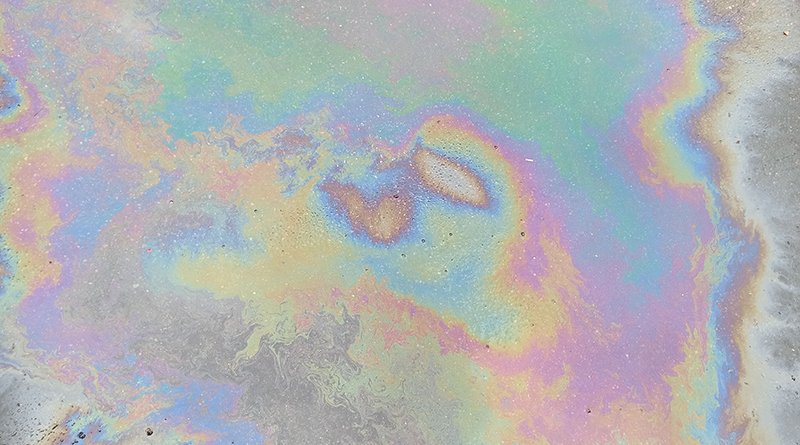
When motor oil seeps from our inboard gas or diesel engine, it naturally finds its way down to the bilge, where it can be pumped directly into the water if not first properly collected. This isn’t only a highly damaging pollutant in our coastal and inland waterways but also a clear violation of the law.
There are several steps you can take to eliminate oil in the bilge. The first step is to check the engine block and oil filter gaskets for oil seepage. When gaskets get old, they may seep a bit of oil. Unfortunately, the only effective way to correct this problem is to change the gaskets, which will probably entail an engine overhaul. If you have any doubts or questions about how to correct the oil seepage, hire a qualified marine mechanic to assess the problem and recommend the appropriate solution.
Oil-absorbent pads in the bilge can work wonders, making the overall job of controlling oil seepage and cleaning the bilge much easier. After removing the oil-soaked pads and water from the bilge and disposing of them properly, clean the area with water and detergent to ensure an oil-free bilge.
Oil leaking from the lower unit of an outboard motor is much easier to observe and correct. If you see oil leaking, change the seals in the lower unit, start the motor in a test bath, such as a trash can, and verify the seals are tight before mounting the motor on your boat and returning it to the water.
Bottom Paint
Our goal of keeping our coastal waters safe for aquatic life also requires us to use bottom paints that have the least potential to hurt aquatic life while still helping us to keep the submerged surfaces of our boats as clean and hydrodynamic as possible. The safest way to protect our hulls is to use paints with lower levels of biocides, the most common of which is copper.
When we look at the harm done by copper paint to the waters of Marina del Rey, Newport Harbor and Shelter Island Yacht Basin, we recognize the need to find a balance between what kind of paint will work effectively to keep bottom growth in check while doing the least amount of damage possible to our inshore waters.
Logically, the paints with the highest copper leach rate have a short lifespan, only two to three years, while paints with lower copper leach rates generally last longer. According to the California State Parks Division of Boating & Waterways, the paints with zero biocide, copper or otherwise, can last up to 10 years with monthly bottom cleanings. Biocide-free paints include International Paint Intersleek 900, Interlux VC Performance Epoxy and Ram Protective Coatings CeRam-Kote. Pettit Hydrocoat Eco is an ablative paint with a “dual biocide” that replaces copper.
Copper paints with low leach rates include Nautical Super ProGuard, Pettit Trinidad Pro, Pettit Vivid Antifouling Marine Paint and Seahawk Sharkskin. If your boat lies in a Southern California marina, choose the paint best suited to its immediate surroundings, along with your personal preferences.
Do what you can to improve the health of our coastal and inland waters by choosing the most environmentally friendly equipment and bottom paint you can find for your boat. Future generations of boaters will owe you a great debt of gratitude.