Once dismissed as the humble dinghies bobbing behind larger yachts, inflatable boats with propulsion systems have quietly transformed into versatile companions — vessels that carry us to shore, slip into kelp forests, or cruise across harbors with a purpose all their own. What began as simple dinghies for hauling supplies ashore has evolved into essential equipment for boaters, anglers, and divers who expect versatility, reliability, and performance.
Image provided by Trade Winds Inflatables
Along the Southern California coast, from San Diego’s offshore waters to the channel crossings out of Santa Barbara, inflatables with propulsion are increasingly relied upon to do more than simply ferry passengers. Compact enough to stow on deck yet sturdy enough to handle a surprising range of conditions, they now serve as independent craft capable of carrying out harbor cruises, dive excursions, and fishing runs, all while offering boaters a level of practicality that’s difficult to match.
The appeal of inflatables lies first in their adaptability. Their light weight and manageable size make them convenient for yacht owners needing a tender, yet they are equally useful for smaller-boat operators who want a secondary craft or a way to reach spots inaccessible to larger vessels or those who don’t want to pull up the anchor to go fish or dive for the afternoon. Anglers benefit from the ability to maneuver close to kelp beds or explore shallow shoreline structure, while divers appreciate the ease of launching near reefs and reserves. Families too, especially those bound for Catalina or other island destinations, find them indispensable for quick shore trips. With the rapid growth of electric propulsion options, the advantages expand further. A quieter, emission-free motor transforms an inflatable into a clean, low-maintenance craft that’s ideal for harbors, sanctuaries, and anywhere noise or fumes might detract from the experience.
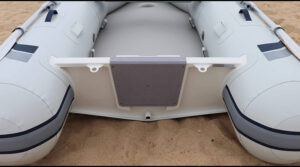
Image provided by Trade Winds Inflatables
To appreciate how these boats have reached this point, and why they have become so central to boating life in Southern California, it’s worth looking at the companies that have made them what they are today. AB Inflatables, Trade Winds Inflatables & Marine, and Four Seas, each bring a different perspective to the conversation, and that’s craftsmanship and sustainability, service and system knowledge, and innovation and indispensability. Together they show why inflatable boats with propulsion systems aren’t only practical but increasingly vital to a wide spectrum of boaters.
AB Inflatables, for instance, has been building inflatables since 1969, when founder Ulrich Heyer identified the need for durable craft in Venezuela’s river systems. What distinguishes the company is its complete in-house approach to manufacturing. Unlike others in the industry, AB oversees every stage of production, from design through final assembly, ensuring consistency and quality that exceed many global standards.
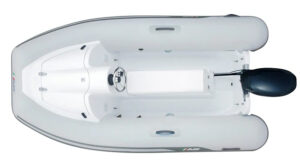
Over the decades this attention to detail has allowed the company to refine its product line, which now includes rigid inflatable boats, tenders, jet inflatables, and professional-use craft. These designs are not only robust but versatile enough to meet the diverse needs of boaters who frequent Southern California waters.
For many buyers, the deciding factor today is propulsion. AB Inflatables has embraced the shift toward electric systems, pairing its boats with ePropulsion motors that offer quiet operation, minimal maintenance, and zero emissions. This evolution reflects the growing demand for sustainable boating practices, particularly in eco-sensitive areas like marine sanctuaries or crowded harbors where noise and exhaust are concerns. At the same time, the company acknowledges the practical realities of range and performance, helping customers choose between electric and gas-powered setups depending on their intended use. A family cruising between harbors might prioritize efficiency and silence, while an offshore angler may still lean toward the extended range of a traditional outboard. AB’s emphasis on matching the right setup to the right application underscores its commitment not just to craftsmanship, but also to guiding boaters toward informed decisions that reflect their unique needs.
Where AB highlights manufacturing and propulsion choices, Trade Winds Inflatables & Marine offers another perspective: long-term service and support. Based in Santa Ana, CA, Trade Winds has been a fixture in the region for more than 40 years. The company isn’t just a retailer but a service hub, providing sales, maintenance, and parts for inflatables and outboards alike. Authorized to represent leading brands such as AB Inflatables, Achilles, Highfield, and Novurania, as well as Yamaha, Tohatsu, and Honda motors, Trade Winds combines product selection with the technical know-how required to keep equipment running reliably.
According to Ed Thomas, Sales Manager and Sailor/Skipper with Trade Winds Inflatables, one of the biggest considerations for clients is where and how their tender will be stored. “For powerboat owners, space and lifting capacity are the key factors. If a yacht already has a tender on chocks or a cradle, we need to evaluate what will fit and what the davit or winch can safely handle. That helps us guide buyers to the right choice and sometimes opens their eyes to new possibilities,” Thomas explained. He added that tenders are often stored on the boat deck, bow, or swim step — with some hydraulic swim steps designed to move up and down to accommodate easier handling.
For sailboat owners, Thomas noted that similar questions apply. “The deciding factor is still storage — does it fit on deck, or can it be lifted with a halyard? Many modern cruising sailboats have stern davits for hanging a tender, while other owners choose inflatables they inflate and deflate each time they’re used. Towing is also an option depending on the setup.” His advice underscores how critical it is for buyers to understand the practical details of their vessel before choosing an inflatable tender.
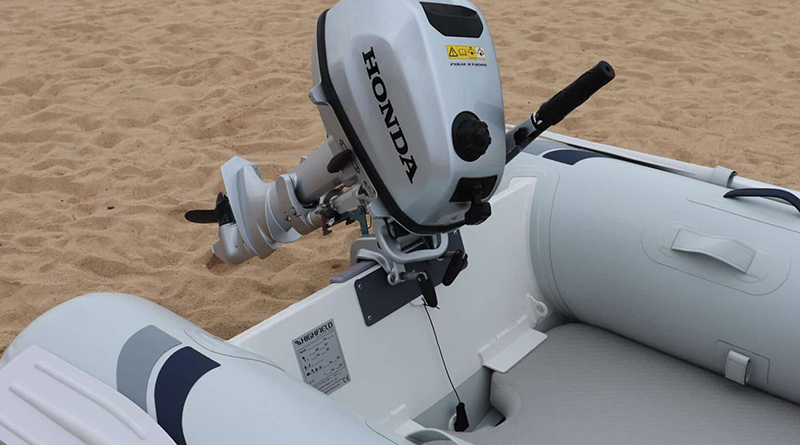
At the heart of the inflatable’s appeal is its propulsion system, which transforms what might otherwise be a rowable dinghy into a versatile and capable craft. By mounting either gas or electric outboards directly to the transom, an inflatable gains speed, maneuverability, and the ability to cover meaningful distances.
For Southern California boaters, this means the freedom to shuttle between slips, run to a dive site, or fish in waters that are out of reach for larger boats. Trade Winds not only sells these boats and motors but also maintains them, offering outboard service that ranges from routine maintenance to major repairs, a parts department with a large stock of Yamaha, Tohatsu, and Honda components, and inflatable repair services that extend the life of hulls. In a region where reliability on the water is everything, Trade Winds has built its reputation on making sure inflatable boats and their propulsion systems are ready when needed.
If AB exemplifies craftsmanship and Trade Winds emphasizes service, Four Seas represents how inflatables have become indispensable for serious boaters. Also based in Santa Ana, Four Seas takes a curated approach to its product line, offering not just inflatables and foldable RIBs but also advanced electric propulsion systems, outboards, and luxury electric cruising boats. Their philosophy blends adventure with dependability, and their offerings reflect a belief that inflatables are no longer secondary craft but central components of a complete boating lifestyle.
Among Four Seas’ standout models is the Fore Runner, a folding rigid inflatable boat designed with offshore performance in mind. Unlike inflatables with soft floors, the Fore Runner incorporates a fiberglass hull with double-welded seams and UV-resistant materials, giving it the strength to handle chop while still folding for storage. This design makes it practical for a wide range of uses, from harbor cruising to rescue operations to offshore excursions. Its durability and portability illustrate how far inflatables have come from the days when they were viewed as limited-use dinghies.
Four Seas also showcases the advantages of pairing inflatables with advanced propulsion, particularly through the Torqeedo Travel electric outboard. Known for its efficiency and quiet operation, the Torqeedo Travel provides the same thrust as a 3 HP gas engine while producing no emissions and operating at just 33 decibels. The top-end 1103 C model features a high-capacity lithium battery and direct drive system, extending range and offering boaters a practical alternative to traditional gas motors. For Southern California anglers needing stealth near kelp beds, divers entering marine reserves, or cruisers looking for an easy-to-manage tender, such propulsion options are redefining what inflatables can achieve.
The broader picture that emerges is one of convergence. AB Inflatables emphasizes craftsmanship and sustainability, Trade Winds provides the expertise to maintain and support these systems, and Four Seas demonstrates how innovation has made them indispensable. Together they represent the range of resources available to Southern California boaters seeking to integrate inflatables into their routines.
For budget-conscious owners, an inflatable with a propulsion system offers an affordable way to enjoy time on the water without the expense of a full-sized vessel. For established yacht owners, they serve as reliable tenders that expand the reach of larger craft. Anglers find them useful for reaching shallower, tighter fishing grounds, while divers rely on them for safe and convenient access to reefs and kelp forests. And across all user groups, the rise of electric propulsion is making inflatables cleaner, quieter, and more versatile than ever before.
What was once dismissed as a simple dinghy has now become one of the most adaptable tools in boating. Compact yet capable, easy to store but strong enough for real work, inflatables with propulsion are filling an increasingly important role along the Southern California coast. They represent not just an accessory to boating life but, for many, an essential part of it, which is proof that even small boats can deliver big possibilities.
For more information on AB Inflatables, visit abinflatables.com. For more on Trade Winds, go to twimarine.com. And lastly, visit fourseas.com for more on Four Seas.