For many readers, Southern California’s waterfront geography can be confusing, especially when conversations turn to Los Angeles Harbor, San Pedro, Wilmington, and neighboring Long Beach. A common question often arises: is there actually a harbor in Los Angeles, or are the ports only located in Long Beach and San Pedro? The answer is yes, Los Angeles does have its own harbor and understanding how it functions helps clarify the role it plays — not only in global trade, but also in local waterfront access and recreational boating.
Los Angeles Harbor refers to the harbor area that belongs to the City of Los Angeles. It’s physically located within the city neighborhoods of San Pedro and Wilmington, both of which are officially part of Los Angeles. When people say, “LA Harbor,” they are describing this geographic harbor area at the southern edge of the city, roughly 25 miles south of downtown Los Angeles. Although the phrase “San Pedro Harbor” is commonly used in conversation, it’s not the official name. San Pedro is the neighborhood where much of the harbor activity takes place, not a separate harbor itself.
Operating within Los Angeles Harbor is the Port of Los Angeles, which serves as the official port authority responsible for managing maritime commerce, terminals, and waterfront development. The Port of Los Angeles is a department of the City of Los Angeles, also known as the Los Angeles Harbor Department, and is governed by the Los Angeles Board of Harbor Commissioners. While it is a city department, the Port is not supported by city tax dollars. Instead, it operates as a landlord port, generating revenue through leases and shipping service fees from more than 200 tenants. Its jurisdiction is limited to the Harbor District, which includes property in San Pedro, Wilmington, and Terminal Island, and its operations are guided by the Public Trust Doctrine to promote maritime commerce, navigation, fisheries, and public access to the waterfront.
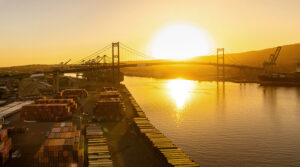
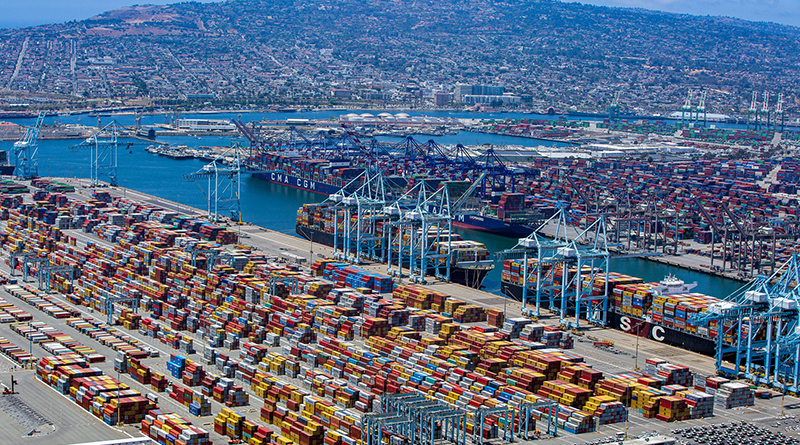
From an operational standpoint, the Port of Los Angeles is one of the most significant trade gateways in the world. Often branded as America’s Port®, it’s the busiest seaport in the Western Hemisphere and has ranked as the No. 1 container port in the United States every year since 2000. Located in San Pedro Bay, the Port encompasses approximately 7,500 acres of land and water along 43 miles of waterfront. Its facilities handle a wide range of cargo, including containers, automobiles, dry and liquid bulk goods, breakbulk cargo, and cruise passengers, managing billions of dollars in trade each year.
That scale is reflected in the Port’s cargo volumes. In 2025, the Port of Los Angeles moved 10.2 million twenty-foot equivalent units, or TEUs, making it the third-busiest year in its history. The Port’s busiest year on record was 2021, when 10.7 million TEUs were handled, followed closely by 2024 with 10.3 million TEUs. Supporting that level of activity requires constant reinvestment, and the Port is currently in the midst of a multi-year, $2.6 billion infrastructure investment program aimed at improving cargo efficiency, modernizing terminals, expanding rail access, and enhancing digital information flow across the supply chain.
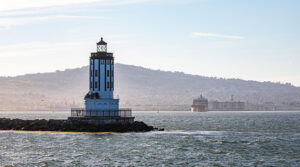
While commercial shipping is the Port’s primary responsibility, Los Angeles Harbor isn’t used exclusively by cargo vessels. Recreational boating also takes place within the harbor, and the Port plays an important supporting and regulatory role in ensuring that commercial and recreational users can safely share the water.
According to Mike Galvin, Director of Waterfront and Commercial Real Estate for the Port of Los Angeles, recreational boating remains an important component of harbor activity. “Boaters are free to move around,” Galvin explained. “There are recreational marinas both in the community of Wilmington and the community of San Pedro. In total, there are about 3,700 slips for recreational boats between those communities, with roughly 2,000 in San Pedro and about 1,700 in Wilmington.”
In addition to marina slips, visitor docking opportunities are available throughout the LA Waterfront. Galvin noted that both communities offer public docks that allow transient boaters to come ashore and enjoy the surrounding attractions. “There are visitor docks in both San Pedro and Wilmington,” he said. “Recreational boaters can transit to and from those marinas and enjoy the public dock amenities located within the visitor-serving areas of the port.”
Because Los Angeles Harbor is first and foremost a working port, recreational boaters must also remain aware of large commercial vessels operating in the same waterways. “Everyone needs to be cognizant of the ongoing commercial operations of the port,” Galvin said. “People need to be aware of large ships that are transiting, and port police help the recreational boating community understand what the parameters are for those navigation pathways in and out of the port.”
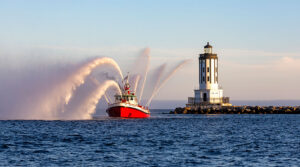
The Port’s role in the harbor extends beyond cargo operations and vessel traffic management. Unlike some neighboring ports, the Port of Los Angeles is responsible not only for commercial shipping terminals but also for the public-facing portions of the waterfront.
Galvin explained that this structure is different from how some other ports in the region operate. In Long Beach, for example, visitor-serving areas are managed by the city rather than the port itself. “The Port of LA operates the entirety of it,” Galvin said. “That includes the cargo terminals as well as the visitor-serving areas of what we call the LA Waterfront.”
Those visitor-serving areas encompass approximately 400 acres of redeveloped waterfront property stretching across nearly eight miles of shoreline in San Pedro and Wilmington. The area includes cruise terminals, marinas, public docks, restaurants, promenades, hotels, and other recreational amenities designed to attract both residents and visitors.
Community accessibility has become a key priority for the Port over the past decade, particularly as boating activity remains strong throughout Southern California. “There are tens of thousands of slips throughout Southern California,” Galvin noted. “Boaters like to go from port to port, and one of the biggest hurdles is finding waterside mooring and docking locations.”
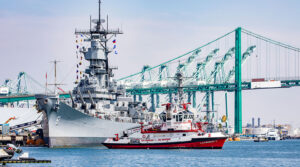
To address that need, the Port has focused on expanding transient docking opportunities along the LA Waterfront. One of the most visible examples is the Downtown Harbor marina basin in San Pedro, which provides significant public docking opportunities adjacent to waterfront restaurants and pedestrian promenades.
Additional access is currently under construction as part of the West Harbor redevelopment project. “We have just finished about 1,200 linear feet of transient dock space at the new West Harbor development,” Galvin said. “It will be publicly accessible once West Harbor opens, which is expected in the summer of 2026.”
The West Harbor project is expected to become one of the largest waterfront entertainment districts in Southern California, featuring approximately two dozen restaurants, waterfront attractions, and a 6,200-seat amphitheater designed for concerts and large public events.
Major international events will also bring increased attention to the harbor in the coming years. Looking ahead to the 2028 Olympic Games in Los Angeles, the Port is preparing facilities that will support sailing activities connected to the event.
“We are redeveloping a camp site on about 12 acres that will serve as a beach and surf facility,” Galvin explained. “It will be used for Olympic sail training, and in the years leading up to the games it will be available for national sailing federations to stage their vessels and train here.”
Beyond infrastructure investments, the Port of Los Angeles has also established programs designed to ensure that surrounding communities benefit directly from waterfront development.
One of the most significant initiatives is the Port’s Public Access Investment Plan, which dedicates a portion of port revenue to community projects. “We take ten percent of our operating income each year and invest it back into waterfront access and community projects,” Galvin said.
Since the program began in 2015, the Port has committed hundreds of millions of dollars toward parks, promenades, waterfront improvements, and recreational amenities. “Through that plan alone we have deployed about $330 million in infrastructure projects,” Galvin noted. “Overall, the port has invested roughly a billion dollars in public access improvements along the waterfront.”
In addition to physical infrastructure, the Port supports community organizations and educational programs through an annual grant program. The initiative distributes approximately $2 million each year to nonprofit organizations, community groups, and youth programs that focus on waterfront education and maritime activities.
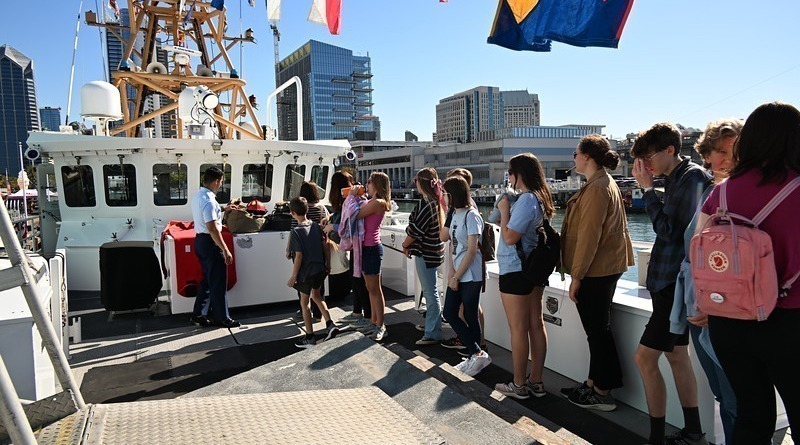
Many of these partnerships aim to introduce young people to maritime careers and ocean science. Programs supported by the grants include youth sailing initiatives, environmental education efforts, and maritime training organizations such as the Los Angeles Maritime Institute.
Phillip Sanfield, Communications Director for the Port of Los Angeles, noted that the Port also supports a wide range of public events throughout the year that help connect residents with the waterfront.
“There are a lot of events,” Sanfield said. “Cars and Stripes takes place on the waterfront right before the Fourth of July. We recently hosted a Lunar New Year festival that drew more than a thousand people, and the Port is a major sponsor of LA Fleet Week during Memorial Day weekend.”
Additional programming includes Earth Day celebrations, concerts, park events, and seasonal community gatherings that take place throughout the LA Waterfront. “We are one hundred percent engaged with the community throughout the year,” Sanfield added.
Taken together, Los Angeles Harbor and the Port of Los Angeles represent more than a collection of docks and terminals. The harbor defines the physical space where maritime activity takes place, while the Port serves as the operating authority
that manages trade, infrastructure, environmental programs, and public access. Alongside the neighboring Port of Long Beach, Los Angeles Harbor anchors one of the most important maritime regions in the world, where global commerce, recreational boating, local communities, and the future of the waterfront intersect every day.