Planned North Embarcadero project aims to expand public access while adding a major waterfront attraction.
A proposed Navy SEAL Museum along San Diego’s North Embarcadero has taken a significant step forward, as the Port of San Diego Board of Port Commissioners has directed staff to begin environmental review of the project. The museum, planned for a former Navy leasehold at 1220 Pacific Highway, represents the latest addition to a waterfront that continues to evolve as both a public destination and a hub for maritime, cultural, and recreational activity.
If approved, the development would introduce a four-level, 85,000-square-foot facility designed to highlight the history, service, and values of the Navy SEALs, while also expanding public access to the bayfront. The project site, acquired by the Port in 2023, is currently used as a Navy parking lot and sits adjacent to Lane Field Park and a cluster of hotels and visitor-serving amenities.
The proposal comes at a time when the Port continues to prioritize projects that enhance access to the waterfront and broaden the range of experiences available to both residents and visitors.
“One of our priorities is to deliver more coastal access for locals and visitors,” said Chair Ann Moore of the Port of San Diego Board of Port Commissioners. “The Port doesn’t collect tax dollars, so we look to projects like this to provide more things to see, do and experience along our bayfront.”
Moore noted that the proposed museum would complement existing attractions along the Embarcadero, including the USS Midway Museum and the Maritime Museum, as well as future developments such as Freedom Park at Navy Burnham Pier. Together, these projects reflect an ongoing effort to create a cohesive and engaging waterfront experience that blends history, recreation, and public space.
At the center of the proposal is a design that combines architectural presence with interactive, educational programming. Plans call for galleries, exhibit spaces, a theater, retail and dining areas, and dedicated space for youth education and community programs. A fourth-floor outdoor terrace and a central atrium are intended to provide both visual connection to the surrounding bay and a sense of openness within the structure.
The project also includes a new 150-foot public park designed to extend and complete Lane Field Park along Harbor Drive. This addition would create a continuous stretch of accessible waterfront space, offering expanded opportunities for recreation and pedestrian access in an area that has become increasingly popular following years of redevelopment under the North Embarcadero Visionary Plan.
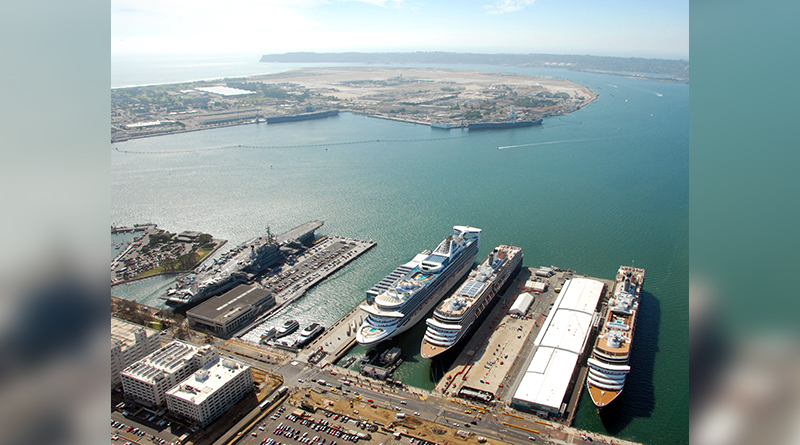
The North Embarcadero, often referred to as San Diego’s “front porch,” has undergone a transformation over the past decade through a partnership between the Port and the City of San Diego. The area now features a bayside promenade, public parks, restaurants, and attractions such as Portside Pier, along with access to harbor cruises and nearby hotels. The proposed museum is positioned to build on that momentum by adding another destination that draws visitors while enhancing public use of the waterfront.
From a financial standpoint, the project is expected to carry an estimated construction cost of $256 million. This figure includes site demolition, building construction, exhibit development, and the creation of the public park. The project is being proposed by Navy SEAL Museum San Diego, LLC, in partnership with Hensel Phelps, LLC, and is not directly affiliated with the U.S. Navy.
If approved, the San Diego location would expand on the legacy of the original Navy SEAL Museum in Fort Pierce, Florida, which opened in 1985, as well as a smaller showcase facility that opened on Kettner Street in San Diego in October 2025. The development team plans to fund the project through a combination of private fundraising and potential debt financing.
Early projections estimate that the museum could attract between 850,000 and just over one million visitors annually by its third year of operation, placing it among the more heavily visited attractions along the Southern California waterfront.
Beyond tourism, the project includes a range of community-focused initiatives designed to provide long-term public benefit. According to the proposal, these efforts would expand on existing programs associated with the Navy SEAL Museum organization, including youth mentorship initiatives, scholarship opportunities, and partnerships with law enforcement and educational institutions. Additional programs would support veterans and their families through financial assistance, equipment support, and K-9 companion placements.
For the Port, projects of this scale are evaluated not only for their economic impact but also for how they contribute to public access and community engagement.
The next phase of the process will involve environmental review under the California Environmental Quality Act, commonly referred to as CEQA. During this stage, Port staff will assess potential environmental impacts associated with the project and identify any necessary mitigation measures. At the same time, staff will continue due diligence related to project financing, which will inform future lease negotiations between the Port and the development team.
A Coastal Development Permit will also be required before construction can move forward, adding another layer of review and approval by the Board of Port Commissioners. At this stage, a timeline for construction and completion has not yet been determined and will depend on the outcome of the environmental review and permitting process.
Architecturally, the project is being designed by ZGF Architects, a firm known for large-scale, high-profile developments, including the Samuel Oschin Air and Space Center in Los Angeles. Preliminary designs for the museum feature an angular, modern structure intended to evoke the form of a naval vessel, with perforated metallic surfaces that allow natural light to filter into the interior spaces.
Exhibit design will be led by Gallagher & Associates, a firm recognized for its work on immersive museum experiences, including projects at the Smithsonian National Air and Space Museum and the National World War II Museum. The proposed exhibits aim to combine advanced technology with storytelling, offering visitors an in-depth look at the history and mission of the Navy SEALs while emphasizing values such as teamwork, honor, courage, and service.
The interior layout is designed to guide visitors through a structured experience, beginning in upper-level galleries and moving downward through the building via a central atrium, ultimately returning to the ground floor. This flow is intended to create a cohesive narrative while maximizing both engagement and accessibility.
As the Port continues to balance its roles in maritime operations, environmental stewardship, and waterfront development, projects like the proposed Navy SEAL Museum highlight the ongoing effort to create a dynamic and accessible bayfront. With 34 miles of waterfront spanning five cities, the Port of San Diego manages a wide range of assets, from cargo and cruise terminals to marinas, parks, and cultural institutions, all without relying on tax revenue.
While the proposed museum is still in the early stages of review, its advancement signals continued investment in San Diego’s waterfront and a broader vision of the Embarcadero as a place where public access, history, and modern development intersect.
For now, the project remains under evaluation, but its potential impact, both as a visitor destination and a community resource, is already part of the conversation shaping the future of San Diego Bay.