Editor’s Note: Information for this story was compiled from a variety of jurisdictions (Counties), experts and organizations. Responses from Vivian Matuk, Environmental Boating Program Manager with the California State Parks and the California Coastal Commission, reflect knowledge gained through events conducted with multiple jurisdictions and organizations, as well as research and professional experience.
Orange County boaters will have the opportunity to dispose of expired marine flares safely and responsibly during a free collection event on Saturday, August 16, 2025, from 7:00 a.m. to 1:00 p.m., at 24650 Dana Point Harbor Drive in Dana Point. The event, led by Orange County Waste and Recycling in partnership with Dana Point Harbor, California State Parks, and the California Coastal Commission, is funded by CalRecycle and designed to help boaters remove expired, outdated, or unwanted marine flares from their vessels and homes while ensuring these hazardous materials are properly handled.
At the event, staff will collect flares directly from the trunks of vehicles, providing a convenient drive-through process for attendees. Additional partners will be on site, including the OC Health Care Agency, which will offer a free bilge pad exchange, and the U.S. Coast Guard Auxiliary’s Dockwalker program, which will provide free California Boater Kits, boating safety information, and discount coupons for E-flares while supplies last.
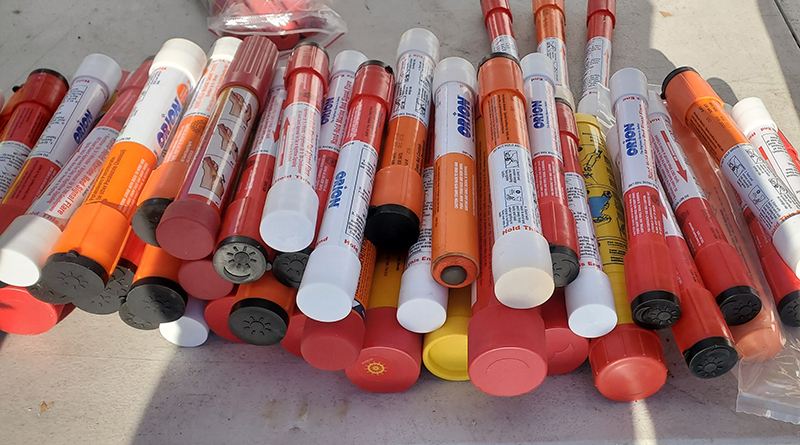
Accepted items at the collection event include hand-held flares, aerial flares, and smoke flares. Electronic flares, military flares, hazardous waste like paint or oil, and non-marine flares such as vehicle emergency flares will not be accepted.
These collection events serve a critical purpose. Marine flares are required safety equipment on many vessels and serve as essential tools for signaling distress at sea. However, they have a limited shelf life — typically three to four years — and once expired, they become unreliable for use and illegal to carry as required safety equipment. According to experts consulted for this story, “The average shelf life for pyrotechnic flares is between 36 and 42 months from the manufacture date because the effectiveness of the chemicals can break down over time.”
Improper storage or disposal of expired flares poses serious hazards. Marine flares contain explosive and combustible chemicals, and keeping them on board a vessel or stored at home beyond their expiration date can lead to accidental ignition or explosion, presenting risks to individuals and property. In addition, disposing of expired flares in regular trash bins, dumpsters, or directly into the environment creates environmental hazards. “Pyrotechnic marine flares contain many toxic chemicals… that can leech into our drinking water and damage our environment when they are improperly thrown away. Remember they are explosives,” said experts consulted for this story.
Simply tossing them in the trash is not just illegal—it’s dangerous. “Expired marine flares are classified as hazardous waste, are transported as explosives and must be disposed of at a hazardous waste facility permitted by the Environmental Protection Agency (EPA) to manage explosives,” explained sources involved in organizing these collection events. “There are only two permitted facilities in the U.S. that accept and treat/dispose of explosive wastes streams, one in Missouri and one in Illinois.”
A marine flare collection event offers a controlled solution to these challenges. At these events, trained staff ensure that expired flares are handled properly and disposed of in compliance with hazardous waste regulations. This service benefits boaters by eliminating expired flares safely and legally while also protecting the environment. “Transporting expired flares requires state and federal permits from agencies like the California Department of Toxic Substance Control (DTSC), the U.S. Department of Transportation, and the EPA,” stated experts consulted for this story.
Events like the one in Dana Point cost local agencies tens of thousands of dollars to operate. “It costs a local jurisdiction anywhere from approximately $14,000 to $30,000 to host a marine flare collection event, with costs increasing each year,” said experts. “The high cost of disposal arises from the lack of facilities that will accept marine flares for disposal, leading to high transportation costs.”
Marine flares come in several types, each serving a distinct function. Hand-held flares produce a bright red flame and are typically used to attract attention when rescuers are nearby. Aerial flares, also known as parachute flares or rockets, are designed to launch high into the sky and emit a bright light as they descend slowly, allowing visibility over long distances. Smoke signals produce dense colored smoke, usually orange, and are effective during daylight hours for marking position or signaling distress when a flame might not be visible.
The U.S. Coast Guard mandates that certain vessels, particularly those operating offshore, carry a combination of these signaling devices. “The Code of Federal Regulations (33 CFR 175.125) states: No person may use a boat unless each signal required by 33 CFR 175.110 is in serviceable condition and the service life of the signal, if indicated by a date marked on the signal, has not expired,” said experts. “Failure to comply with these equipment requirements could result in a $1,100 fine.”
Marine flare collection events like the one scheduled for August 16 serve as a reminder to boaters of the importance of regularly inspecting safety equipment and replacing expired items. By participating, boaters not only maintain regulatory compliance but also reduce safety risks for themselves and their crews.
Beyond the Orange County event, similar efforts are taking place across the state. “Other events happening in 2025 are in November with the following local governments and organizations: City of Oceanside, Alameda County, Del Norte County, Marin County, Napa County, San Francisco County, San Luis Obispo County, Santa Barbara County, Santa Cruz County, Port of San Diego, Port of Los Angeles, and West Contra Costa County,” said experts consulted for this story. “These events are in partnership with California State Parks and the California Coastal Commission, California Product Stewardship Council and often funded by CalRecycle.”
Some events are hosted in coordination with local marinas and harbors. “Some counties or jurisdictions receive a CalRecycle grant or use their own money to conduct collection events and some jurisdictions partner with local marinas or harbors to collect the flares,” said experts. “For example, this is the case for the Aug. 16 Orange County collection event hosted by Dana Point Harbor. Other examples include the Marin County collection event, which will take place at Clipper Yacht Harbor, and the events at the Port of San Diego and Port of Los Angeles.”
Boaters can stay informed about upcoming collection events and safe disposal practices in several ways. “Boaters can join the California Expired Marine Flare Listserv to receive updates about the collection events or they can email [email protected] to be added to the events distribution list,” said experts consulted for this story.
These coordinated efforts highlight a growing recognition that boating safety and environmental protection go hand in hand. Providing boaters with safe options to dispose of hazardous equipment while also distributing tools and information to promote safe boating practices helps reduce risks both on the water and on land.
As California’s boating season continues, marine flare collection events offer boaters a timely opportunity to check their vessels for expired safety equipment. Those who can’t attend the August 16 event can visit the OC Waste & Recycling website (OCLandfills.com/hazardous-waste) for information on additional hazardous waste disposal options and future marine flare collection dates in their area.
Boaters are encouraged to spread the word about the Dana Point event and upcoming events statewide. Keeping expired marine flares out of circulation and properly disposing of them improves safety for everyone who spends time on the water, as well as for those who work onshore handling waste.
For more information about the Dana Point event on August 16 and other upcoming opportunities to dispose of marine flares safely, visit OCLandfills.com/events/marine-flare-collection-event.