Navigating after dark has always been one of boating’s most demanding challenges. Reduced visibility, unlit hazards, floating debris, and the difficulty of judging distance once the sun sets all increase risk on the water. While radar remains a cornerstone of nighttime navigation, advances in marine imaging technology are giving boaters additional tools to improve situational awareness, particularly in conditions where the human eye struggles most.
Today’s low-light and night-vision solutions generally fall into three categories: ultra-low-light cameras, thermal imaging systems, and AI-assisted detection platforms. Each approaches nighttime visibility differently, and many boaters are now combining these technologies rather than relying on a single solution.
Ultra-low-light cameras amplify available ambient light such as starlight, moonlight, and shoreline glow to create a visible image that closely resembles what the eye expects to see, often in color. These systems can be especially effective in coastal environments, harbors, and near populated shorelines where some light is present but insufficient for safe visual navigation.
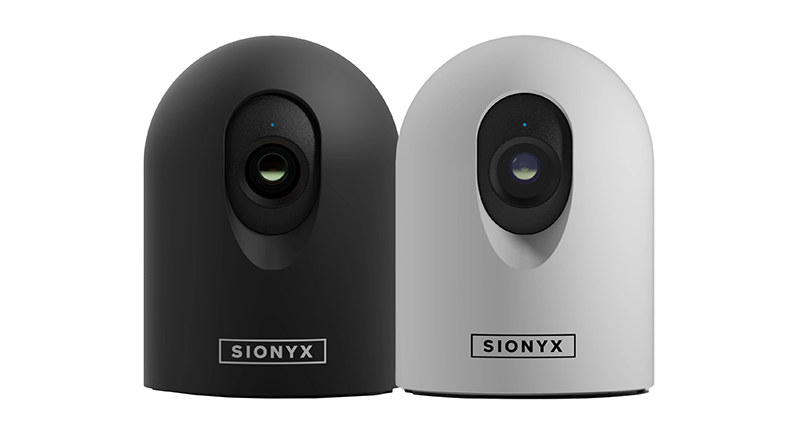
One example of this technology is produced by SIONYX, which develops digital ultra-low-light cameras designed for marine use. Unlike thermal systems, which detect heat, ultra-low-light cameras enhance reflected light, allowing operators to identify navigation markers, vessels, docks, and surface features in a more intuitive visual format. For many recreational boaters, this type of camera can serve as a bridge between traditional eyesight and radar.
To better understand how these systems behave in real-world conditions, The Log asked Brit Wanick of SIONYX Marine about performance factors boaters should be aware of. She explained that, “In real marine environments, performance is determined less by raw sensor sensitivity and more by how the entire imaging system—optics, sensor, processing, and image logic—works together under constantly changing conditions to deliver an image to the display at the helm.”
She added that marine environments introduce variables that challenge imaging consistency. “Water spray, reflective hull and railing surfaces, background harbor lighting, and shifting reflections from waves can combine with haze and other factors to make producing a clear and discernable image a challenge.” According to Wanick, a well-designed ultra-low-light system works to “preserve usable contrast, not just amplifying brightness,” actively manages glare, and maintains clarity as conditions rapidly shift—ensuring the image remains stable even when the boat transitions from open water to shoreline glow or encounters bioluminescence or haze.
Thermal imaging systems take a different approach. Rather than relying on reflected light, thermal cameras detect heat signatures, making them effective in complete darkness and challenging weather conditions. FLIR has long been a leader in this space, with marine thermal cameras widely used by professional mariners, law enforcement, and offshore operators.
FLIR’s marine thermal systems, such as compact pan-and-tilt cameras, are designed to identify objects like other vessels, people in the water, and shoreline features based on temperature differences. Thermal imaging excels in scenarios where ambient light is minimal or nonexistent, such as moonless nights offshore, though it may provide less visual detail for reading buoys or interpreting color-based navigation aids.
To understand what makes ultra-low-light cameras different from land-based imaging systems, The Log asked Wanick about the engineering considerations behind marine night-vision design. She stressed that “for marine night vision, the external hardware must survive wet conditions (saltwater or freshwater spray) and corrosion — but the system must survive real boating.” She emphasized durability, optical clarity, and processing stability, noting that “lens design and coatings must minimize water adhesion and distortion while providing sufficient field of view, because software cannot recover information that never reaches the sensor.” She also highlighted the need for predictable performance, explaining that “marine night vision is not a static use case. The software must deliver consistent behavior across changing light, weather, and vessel motion conditions,” while requiring minimal operator input.
More recently, artificial intelligence has begun to play a role in nighttime navigation. SEA.AI has developed systems that combine thermal and optical imaging with AI-powered object recognition. These platforms are designed to detect, classify, and track unlit vessels, floating debris, and people in the water, even in congested or low-visibility conditions.
AI-assisted systems are typically aimed at larger vessels, professional captains, and commercial or government operators, where constant monitoring and automated alerts can reduce workload and improve response times. By identifying hazards that might otherwise go unnoticed, these systems represent a growing trend toward predictive and preventative navigation technology.
For recreational boaters, the key consideration is not which technology is “best,” but which combination best suits their operating environment. Ultra-low-light cameras tend to perform well in harbors, anchorages, and coastal waters with some ambient light. Thermal cameras provide critical detection capabilities in total darkness or offshore settings. AI-based platforms add another layer by reducing reliance on continuous human observation.
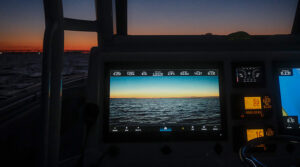
Integration with existing electronics is also an important factor. To help boaters understand how low-light cameras should work alongside chartplotters and radar, Wanick explained that “the most effective integrations use the existing marine electronics display (or MFD) already present at the helm station to add the camera display as an aid to navigation alongside common navigational plots or GPS tracks for greater situational awareness.” She noted that radar, charts, and low-light video each play complementary roles, adding visual confirmation to what a boater sees on screen. Proper integration ensures that the image appears intuitive and consistent, allowing boaters to interpret what they’re seeing quickly and confidently.
Equally critical is understanding system limitations. When asked about constraints in fog, total darkness, or dense harbors, Wanick clarified that “ultra-low-light cameras rely on reflected light to ‘see’ objects and extend human vision beyond its typical spectrum—they do not operate like thermal cameras that rely on temperature difference, nor do they replace the skills of a seasoned boater.” She emphasized that even the best systems need some ambient light and that radar often performs better in fog or heavy precipitation. She also cautioned boaters to use these tools responsibly, noting, “Treating the camera as an aid, not a substitute—verify your surroundings. Never use improved visibility to justify increased speed.”
Finally, The Log asked where ultra-low-light systems provide the greatest benefit. According to Wanick, they excel in situations “where human vision struggles most, but where a very small amount of ambient light still exists,” such as pre-dawn departures, late-night returns, coastal fishing trips, and nighttime docking or maneuvering in congested areas. However, she emphasized that traditional methods remain essential in dense fog, during complex navigational situations, or whenever collision-avoidance judgment is required. As she put it, “Boating at night safely happens when ultra-low-light cameras are part [of a] complete navigation strategy that combines proven marine electronics and good seamanship.”
As marine electronics continue to evolve, nighttime navigation is becoming safer and more accessible for a wider range of boaters. Whether through ultra-low-light imaging, thermal detection, or AI-assisted awareness, today’s options reflect a growing emphasis on layered safety and informed decision-making—helping mariners better understand what lies ahead when visibility is at its lowest.