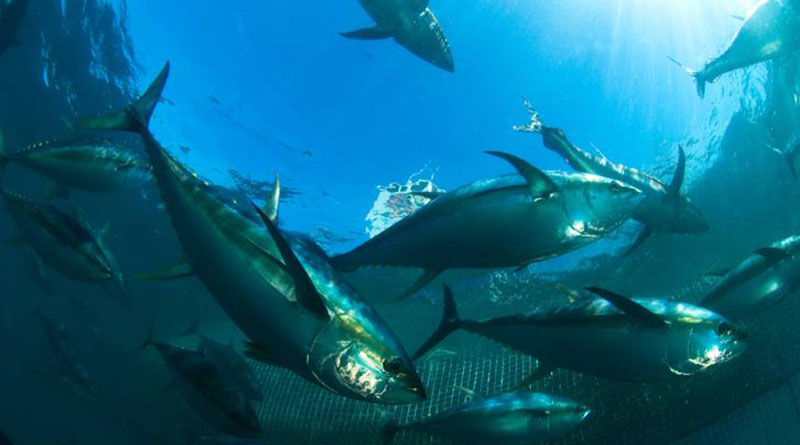
New limits began June 3, 2025, and continue through December 31; targeted fishing remains off-limits in the Gulf of Mexico (per its longstanding name, though renamed by U.S. authorities as the “Gulf of America”).
By: Log Staff
NOAA Fisheries has announced a change to the daily recreational retention limits for Atlantic bluefin tuna, effective June 3 through December 31, 2025, for vessels holding Highly Migratory Species (HMS) Angling or Charter/Headboat permits. The updated regulations are aimed at balancing fishing opportunity with the need to stay within quota limits. The goal is to allow good fishing opportunities without overfishing.
The new retention limits apply to all U.S. regions except the Gulf of Mexico, where targeted bluefin tuna fishing remains prohibited by NOAA due to ongoing conservation efforts. These adjustments may be revised later in the season if catch rates indicate further management actions are needed to avoid overharvest.
| Vessel/ Permit Type | Default Retention Limit per Vessel per Day/Trip | Adjusted Retention Limit per Vessel per Day/Trip |
|
Private vessels with a Highly Migratory Species (HMS) Angling category permit |
1 school, large school, or small medium (27 to <73”) |
1 school (27 to <47”) 0 large school/small medium (47 to <73”)
|
|
Charter boats with an HMS Charter/Headboat permit fishing recreationally |
1 school, large school, or small medium
|
2 school 0 large school/small medium
|
|
Headboats with an HMS Charter/Headboat permit fishing recreationally |
1 school, large school, or small medium
|
2 school 0 large school/small medium
|
According to NOAA Fisheries, the updated limits are designed to “provide a reasonable opportunity to harvest the available angling category quota and subquotas, without exceeding them, while maintaining equitable fishing opportunities.” In layman’s terms, the updated limits are intended to give recreational anglers a fair chance to catch bluefin tuna without exceeding the total allowable quota for the year. The changes are also designed to ensure that fishing opportunities are distributed equitably among different types of vessels and regions.
When making inseason adjustments such as quota transfers or changes to retention limits, NOAA Fisheries takes into account a range of regulatory criteria outlined in 50 CFR 635.27(a)(7), with particular attention to factors (i) through (x), along with other relevant considerations. For recreational retention limits, NOAA Fisheries also has the authority to establish different limits for private vessels, charter boats, and headboats. In both commercial and recreational fisheries, the decision-making process relies on a variety of information sources, including available bluefin tuna quotas and subquotas, current and historical catch and landings data, and observed trends in bluefin tuna availability on the fishing grounds. This data is gathered through mandatory reports submitted by fishermen, landings information from fish dealers, and surveys conducted within the recreational fishing community.
The change impacts all recreational fishermen operating under HMS Angling and HMS Charter/Headboat permits. Daily retention limits vary by vessel type and region, and anglers are encouraged to review the full retention table published by NOAA before heading out. An HMS permit allows recreational or commercial vessels to legally fish for and retain species such as tuna, swordfish, sharks, marlin, and other large pelagic fish that migrate long distances across ocean regions. The permit ensures that vessels comply with federal regulations under the NOAA Fisheries Highly Migratory Species Management Division.
In addition to observing retention limits, all permitted vessel owners are required to report any bluefin tuna retained or discarded dead within 24 hours of landing or the end of their trip. Catch reports can be submitted in one of three ways:
- Through the HMS Permit Shop online
- Using the HMS Catch Reporting App
- By calling 888-872-8862 (Monday through Friday, 8 a.m. to 4:30 p.m.)
The agency also noted that, in accordance with Executive Order 14172, the term “Gulf of America” is now used in official documents in place of “Gulf of Mexico,” including in regulations outlined under 50 CFR part 635. NOAA will continue to abide by this Executive Order for the time being.
For more information and to review the latest retention table, visit fisheries.noaa.gov/topic/atlantic-highly-migratory-species.