From dinghies to ski boats and small cabin cruisers, the easiest way to provide propulsion power is with one or more gasoline or electric outboard motors. That means no stepping in an oily bilge and no twisting our bodies into painful contortions to adjust or repair the gearbox at the rear of the engine. We simply install the outboard on the vessel’s transom, hook up the fuel line or the cables leading to the battery, and if necessary, connect the starter cable to the vessel’s key ignition at the wheel console.
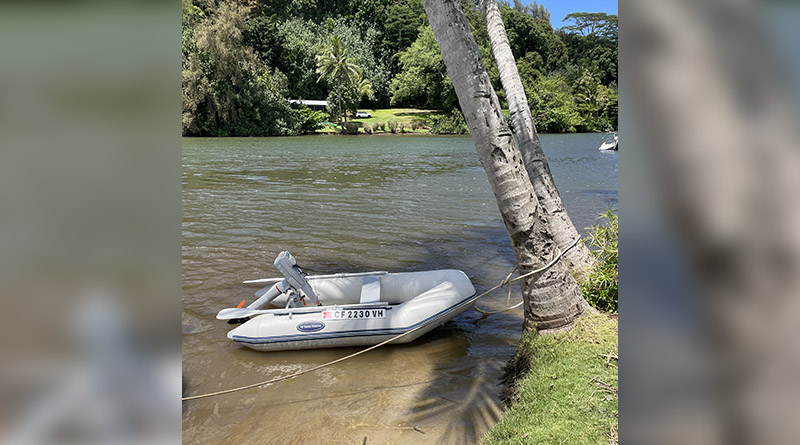
In a small dinghy, we find freedom in exploring small coves around Southern California’s Channel Islands, many of which are inaccessible on a larger boat. We pull the dinghy up on a hidden beach, go ashore with a picnic basket and enjoy the peaceful surroundings until we are ready to return to our main vessel.
On a midsize skiff, we can cruise around our local harbors for a bit of sightseeing or visit friends on other boats in our marina or mooring field. A 13-foot Boston Whaler with a 25-horsepower outboard is the perfect platform for cruising around our local marinas and island anchorages.
Larger craft, such as cabin cruisers and coastal fishing boats, need a much more powerful engine, ranging anywhere from 50 to 600 horsepower, depending on the vessel’s size and purpose and the specific needs of the owner. Nowadays, outboard motors may derive their power from gasoline, LPG or a lithium ion battery and deliver propulsion through a traditional propeller or a jet drive. The obvious advantages of a jet drive are no more fishing lines or floating ropes getting wrapped around the prop and no more repairs to a bent or broken prop.
Trade Wind Inflatables, located in Santa Ana, has been serving the Southland for over 25 years and can match a new inflatable dinghy or runabout with an outboard motor from Tohatsu, Yamaha or Honda Marine. They also have a wide selection of battery-powered outboards for skippers who prefer an ecologically friendly source of propulsion power.
At the top end of the Tohatsu outboard line is the BFT250D, powered by a 3.6-liter, four-stroke, V6 engine putting out 250 horsepower, the average power of a midsize sedan. Using a four-stroke engine, much like the one under the hood of your car, ensures a cleaner, leaner burn than that found in two-stroke outboards.
If you need plenty of power, but plan to navigate in shallow or swampy water, the Tohatsu MFS35AJET, with its 50-horsepower jet propulsion and electronic fuel injection, can have you skimming over shallow areas without fear of breaking the propeller or getting caught in vegetation lying just under the water’s surface. A high-output, 21A alternator keeps the starter battery charged, ensuring navigation electronics and other onboard systems have a consistent, robust power source. The jet system also provides power trim and tilt for a fast, safe ride.
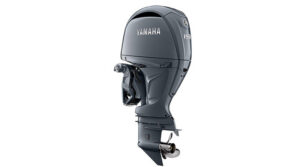
The selection of Yamaha outboards at Trade Wind is also quite impressive, with its 450-horsepower XF450 V8 engine leading the pack of the Yamaha line. This half-ton outboard is a far cry from what most of us hang on the transom of our dinghies. This type of power is used to propel midsize cabin cruisers, ski boats and fishing vessels on coastal fishing expeditions in all kinds of weather. Depending on the depth of your boat’s transom, you can select from three shaft lengths: 25, 30 or 35 inches.
The Yamaha F150 Jet cranks out 105 horsepower at 5500 RPM with its inline-4, 2.7-liter engine, and at just under 500 pounds, weighs roughly half that of the XF450. This engine fits a 25-inch transom, a common depth for inshore speed boats in the 25- to 30-foot range, such as the Alumaweld Columbia 25 and the Munson 25 series of boats.
At the top of the Honda outboard line is the BF350 with its explosive power of 350 horsepower produced by a four-stroke V8 engine with a micro-programmed ignition system. If there is one money-saving feature in this beast of an outboard, it’s the relatively inexpensive, 86-octane gasoline it consumes. At just under 800 pounds with a displacement of 302 cubic inches, this engine packs a lot of power for its size and weight. You can select from two shaft sizes with the BF350, either the X Type at 25 inches, or the U Type at 30 inches.
Some of us prefer a quieter, lighter outboard for our dinghies, without the noise or fumes that come with all gasoline-powered outboards, regardless of make or model. Next to sailing or rowing, the quietest, most peaceful source of dinghy power is an electric outboard. This option is not as powerful as the internal combustion engine, but these outboards provide more power and running time than you may expect. If you are interested in the option of an electric outboard, Trade Wind can find the right model to provide the clean, quiet performance you seek for your boat.
One great choice for an electric outboard is the Tohatsu MEP6.0A, which is powered by an Alaris 6.0kW, brushless DC motor with built-in GPS and shaft length options of 15, 20 and 25 inches. This model comes with a three-inch display screen with touch controls for such functions as speed and tilt position, plus charge level and diagnostic reports, all available in English, Spanish, Dutch, French, German and Italian.
The Torqeedo line of electric outboards, available at West Marine and other chandleries, offers dependable, maintenance-free operation for many years with zero maintenance. Available in three models — Ultralight (1.3 horsepower), Travel (2.5 horsepower) and Cruise (6.25 horsepower) — these little wonders provide all the power your dinghy needs for fishing in calm waters or getting from the anchorage to the dinghy dock.
The small Torqeedo I carry on my Cal 30 Saltaire has powered the inflatable dinghy countless times in Isthmus Cove, Catalina Island, and on the Hanalei River in Kauai. To date it’s never run out of power. When at anchor, a 100W solar panel, along with a controller, group 31 house battery and DC-AC inverter, keep the Torqeedo battery topped off. In all the years I have owned my Torqeedo, it has never run out of power.
When reviewing the outboard motor options for your dinghy, runabout or cabin cruiser, take time to study the options, take in advice from fellow mariners and choose the outboard best suited to your vessel and pocketbook.