California’s long-term effort to rebuild struggling salmon runs took another step forward as the California Department of Fish and Wildlife announced more than $10 million in new grant awards for salmon and steelhead habitat restoration projects statewide. The funding supports 16 projects selected through the state’s Fisheries Restoration Grant Program and reflects the broader goals outlined in California’s Salmon Strategy for a Hotter, Drier Future.
The projects are part of Governor Gavin Newsom’s comprehensive approach to restoring salmon populations by improving habitat conditions, reconnecting rivers, and preparing fisheries for increasing climate pressures. Together, the funded efforts focus on restoring migration pathways, enhancing juvenile rearing habitat, increasing stream complexity, and strengthening science-based management across key California watersheds.
“These investments are another step forward to help California salmon,” said California Natural Resources Secretary Wade Crowfoot. He emphasized that improving the health of creeks and rivers will help salmon persist through climate change while benefiting fisheries and communities that depend on healthy river systems.
Funding was awarded through the Fisheries Restoration Grant Program, which was first established in 1981. Since 2000, the program has incorporated funding from NOAA’s Pacific Coastal Salmon Recovery Fund, created by Congress to reverse salmon and steelhead declines along the West Coast. This year’s awards also include funding from the Bipartisan Infrastructure Law and the Inflation Reduction Act, significantly expanding the scope of restoration work.
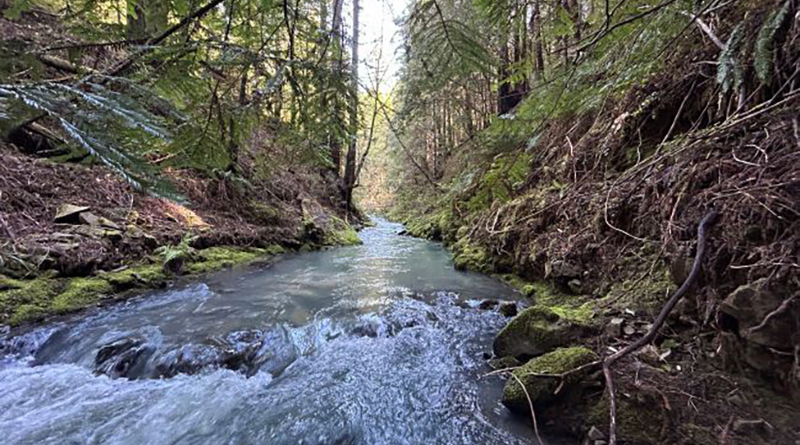
Several of the selected projects focus on removing long-standing barriers to fish passage. One effort will remove three coastal stream barriers, reopening more than seven miles of river habitat critical for spawning and juvenile rearing. Other projects emphasize floodplain reconnection, improved streamflow conditions, and the strategic placement of large wood structures to create more resilient river systems.
Among the largest grants, the South Yuba River Citizens League received more than $1.8 million to restore eight acres of juvenile rearing habitat along the Yuba River, supporting spring- and fall-run Chinook salmon and Central Valley steelhead. Trout Unlimited was also awarded funding for multiple projects, including habitat enhancements in Chamberlain Creek through the installation of more than 100 large wood structures along a 2.56-mile reach.
“These projects are implementing Salmon Strategy actions in real time,” said CDFW Acting Director Valerie Termini. She noted that improved habitat and migration conditions have already contributed to salmon and steelhead returning to rivers where they had not been seen in decades.
In addition to on-the-ground restoration, the grant program continues to support education and workforce development. Funding was awarded for the 2027 and 2028 Salmonid Restoration Conferences, which provide technical training and hands-on instruction for landowners, scientists, tribal members, students, and restoration practitioners.
Interest in restoration funding remains strong. CDFW received 53 proposals requesting more than $49 million during the most recent solicitation, highlighting both the scale of restoration needs and the growing network of organizations engaged in recovery work.
Looking ahead, CDFW is now accepting concept proposals for the 2026 Fisheries Restoration Grant Program solicitation, with submissions due March 2, 2026. An online public workshop will be held Feb. 4, 2026, to provide guidance on the application process.
Collectively, the awarded projects advance state and federal recovery plans focused on removing migration barriers, restoring riparian habitat, addressing wildfire impacts, and improving water system resilience. For California’s salmon fisheries and the coastal and inland communities tied to them, the investment represents meaningful progress toward long-term recovery.