As California regulators move forward with the next phase of environmental review, Platform Holly, located roughly two miles off the coast of Goleta in the Santa Barbara Channel, is once again at the center of a long-running and complex debate over offshore decommissioning, environmental responsibility, and the future of legacy oil infrastructure in state waters.
Platform Holly is one of California’s most recognizable offshore oil and gas platforms, both for its industrial presence on the horizon and for its connection to a pivotal moment in the state’s environmental history. Installed in the late 1960s, the platform was designed not only to drill for oil and gas beneath the seafloor, but also to process hydrocarbons before sending them to shore via pipeline. For nearly five decades, it operated as part of California’s offshore energy system, until production ceased following the 2015 Refugio oil spill. Since then, the structure has remained idle offshore, a visible reminder of the state’s petroleum past.
For readers unfamiliar with Platform Holly, its significance extends well beyond its steel superstructure. The platform is closely associated with the 1969 Santa Barbara oil spill, an event that helped galvanize the modern environmental movement in California and led to sweeping changes in coastal regulation, offshore drilling oversight, and public attitudes toward oil development. That legacy continues to influence how the platform is viewed today, as regulators weigh whether decommissioning should prioritize complete removal or allow portions of the structure to remain.
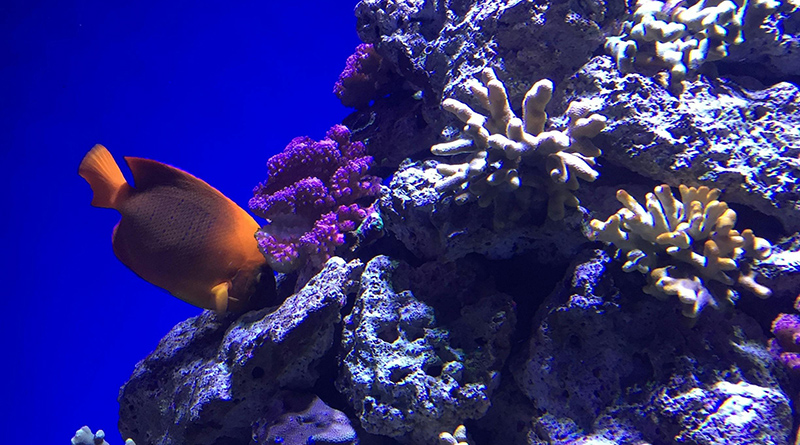
In recent years, Platform Holly has become a focal point for discussions about what happens after offshore oil production ends. Although the platform no longer produces oil, the underwater portion of its structure has developed into a complex marine habitat. Over decades, mussels, anemones, barnacles, and other invertebrates have colonized the steel legs and crossbeams, creating vertical relief that attracts a wide range of marine life. Fish species commonly associated with rocky reefs, including various rockfish and lingcod, are known to inhabit the deeper sections of the structure, particularly at depths well below the surface.
This ecological transformation has fueled a broader debate about whether offshore platforms should be fully removed or partially dismantled under so-called “rigs-to-reefs” concepts. Proponents of partial removal point to scientific studies showing that platforms can function as artificial reefs, particularly in deeper waters where juvenile and adult fish find shelter and feeding opportunities. Research conducted over several decades, including work by University of California scientists, has documented high densities of certain species on offshore platforms when compared to nearby natural reefs. At the same time, researchers have cautioned that local abundance does not necessarily translate into broader regional benefits for fish populations.
That nuance lies at the heart of the current decision-making process. Past scientific reviews, including findings presented to the University of California Marine Council, have concluded that while offshore platforms support dense marine communities, there is insufficient evidence to determine whether they significantly increase or decrease fish populations across the broader Southern California Bight. The number of platforms offshore represents only a small fraction of available hard substrate in the region, and their overall contribution to regional habitat remains difficult to quantify with certainty.
Nevertheless, those same reviews acknowledge that removing a platform would eliminate the marine life currently attached to it, even if the larger population-level effects remain unclear. Partial removal alternatives, which typically involve cutting the structure well below the surface to meet navigational safety requirements, have been shown to preserve much of the deeper habitat while eliminating surface hazards.
Environmental organizations, however, have raised concerns that extend beyond habitat considerations. Statements made by environmental advocates to other news outlets emphasize the presence of legacy contamination associated with offshore oil operations, including drilling muds, cuttings, and shell mounds that can contain elevated levels of heavy metals and petroleum-derived compounds. Historical environmental reviews conducted by the California State Lands Commission have found that some of these materials persist on the seafloor long after platforms cease operation, and that their biological value may be limited.
According to those assessments, full removal and cleanup are viewed by some as necessary to restore the seafloor to its pre-industrial condition, even though the removal process itself can temporarily disturb sediments and affect water quality. Federal analyses, including a 2023 programmatic environmental review prepared for offshore decommissioning across Southern California, have concluded that complete removal generally results in greater seafloor disturbance and permanent loss of rig-associated habitat than partial removal, though many impacts can be mitigated.
Platform Holly’s situation is further complicated by its location in state waters, rather than federal waters. After the platform’s operator declared bankruptcy in 2017, the State Lands Commission assumed control of the site under its police powers. While ExxonMobil, a former leaseholder, remains financially responsible for much of the decommissioning cost, the state now plays a direct role in determining how the structure is ultimately dismantled. California’s Marine Resources Legacy Act allows for partial removal under a rigs-to-reefs framework, but no platform located in state waters has yet been converted under that program.
The issue moved into a new phase on January 26, 2026, when the State Lands Commission released a Notice of Preparation for an Environmental Impact Report focused on the Platform Holly Decommissioning Project. Public scoping meetings are scheduled for February 19 at Goleta City Hall, with written comments due by February 23. As of the article’s publication on February 27, regulators are beginning to gather public input that will shape the scope and direction of the environmental analysis.
At its core, the debate surrounding Platform Holly is not about whether the structure will eventually be removed, but how that removal should occur and what values should guide the process. One approach emphasizes restoration to pre-1966 conditions, prioritizing the removal of industrial infrastructure and associated contamination. The other recognizes the ecological community that has developed over more than half a century and questions whether eliminating that habitat constitutes restoration or loss.
State regulators must now weigh competing considerations, including ecological uncertainty, contamination risks, navigational safety, cost, legal obligations, and public sentiment. The Environmental Impact Report process will extend through public scoping, draft analysis, public comment, and final certification, with decisions likely to influence how future offshore decommissioning projects are handled along California’s coast.
For coastal communities, boaters, anglers, and environmental stakeholders alike, the outcome will define how California reconciles its environmental legacy with present-day realities beneath the waterline.