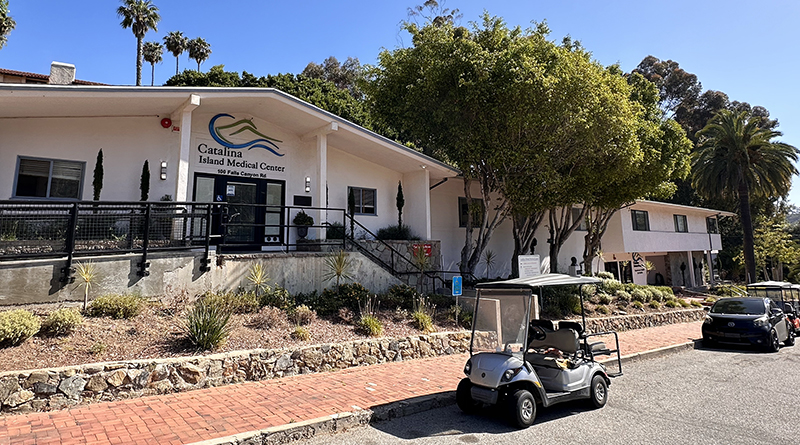
Catalina Island may be best known for its scenic harbors, crystal-clear waters, and laid-back pace, but for residents and visitors alike, knowing that quality health care is just around the corner is equally vital. That peace of mind is thanks to Catalina Island Health (CIH)—the island’s only hospital and an essential lifeline for the community it serves.
For more than six decades, CIH has provided critical medical services to Catalina’s approximately 4,000 year-round residents and the more than one million visitors who flock to Avalon and its coves each year. Their role goes far beyond emergency care—it’s a story of history, community investment, and an unwavering commitment to keeping Catalina healthy, despite the island’s isolation.

Formerly known as Avalon Municipal Hospital, CIH first opened on January 24, 1960, when local leaders, led by Joe Arno, recognized the urgent need for reliable medical care. Prior to that, Catalina lacked a hospital entirely for two years, relying instead on a small clinic where even childbirth and minor surgeries took place.
Today, CIH is the only medical provider on Catalina and notably the only critical access hospital in Los Angeles County, as Gail Fornasiere, Director of Community Outreach for CIH, explains. “Emergencies that occur outside of Avalon are mostly handled by the Los Angeles County Fire Department and Baywatch at the Isthmus and/or Avalon,” Fornasiere says. “Depending upon the situation—weather, seriousness of injury—they will transport patients to CIH or, in rare cases, directly to the mainland.”
For serious emergencies that require mainland care, CIH orchestrates the process. “In most cases, CIH is the one who will arrange for the medevac transfer,” Fornasiere notes. The process typically begins with commercial helicopter services like Mercy Air, moving down a list that includes Los Angeles County Fire, the U.S. Coast Guard helicopter, and finally Coast Guard boat if conditions demand it. The logistics can become intense, as weather conditions and transportation availability can dictate patient care.
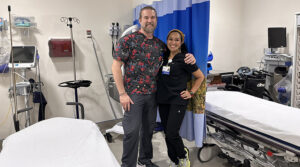
“Our team assesses, stabilizes, and treats patients in our ER. If it is determined they need a higher level of care, they will be medevaced to a trauma center,” she explains. “Weather is always a factor, which means we may need to keep them in the ER as we wait for fog or a storm to clear. It can get very tense.”
Despite these challenges, most emergencies are handled right on island: CIH typically sees about 2,400 emergency room visits per year, with only about 250 patients requiring transport to the mainland.
This impressive self-sufficiency reflects CIH’s expanding capabilities. What began as a six-bed hospital now features a 12-bed facility that balances both short-term care and longer-term rehabilitation. “Four beds are for long-term care patients who actually live full-time at the hospital,” Fornasiere says. “The other eight are for acute or post-acute care—residents or visitors who are too well for an ICU but not ready to go home.”
In addition to 24/7 emergency services, CIH operates a robust primary care clinic staffed by bilingual physicians, nurse practitioners, and support staff focused on preventative and ongoing care. Visiting specialists from the mainland rotate through the clinic as well, offering cardiology, orthopedics, dermatology, ophthalmology, and more—services that would otherwise require an off-island trip.
Catalina Island Health also provides essential community wellness services that extend beyond medical treatment. “We offer mental health services, physical therapy, and occupational therapy, all right here on the island,” Fornasiere says. These services, she notes, help islanders recover without having to manage the logistical burden of mainland appointments. CIH’s physical therapy department even offers free strength training and chair yoga classes for seniors, further enhancing community health and well-being.
Insurance coverage on Catalina is much like the mainland, but Fornasiere acknowledges the additional complexity faced by many island residents who work multiple part-time jobs without employer-sponsored coverage. “We’ve surveyed business owners in Avalon to better understand what insurance plans employees are using, and we’re working with ten different insurance companies to negotiate or re-negotiate our rates and terms,” she explains. The goal is to ensure CIH can accept as many local plans as possible—a process that will ultimately benefit the entire community.
For visitors who might unexpectedly need care, CIH’s billing process is straightforward. “Billing and insurance would work the same as anywhere on the mainland,” says Fornasiere. “If a visitor knows they may need services while here, they can call ahead to our clinic with questions or to verify insurance. And of course, in an emergency, our ER is open 24/7 and ready to help everyone, regardless of insurance status.”
Healthcare on Catalina isn’t just about the present—it’s deeply rooted in a legacy of care stretching back more than a century, a history CIH embraces as it looks toward the future. “Island residents care deeply about each other,” Fornasiere reflects. “That spirit of compassion and the desire to deliver quality care has been a driving force for CIH over the years.”
As CIH prepares to replace its aging facility with a modern, state-of-the-art hospital, honoring that history is part of the plan. “We are exploring ways to showcase and honor our history in the new hospital,” says Fornasiere. “Some supporters have already come forward to name spaces in honor of loved ones who were part of the island’s rich history and the hospital’s story.”
A key driver of that future is the Catalina Island Health Foundation, whose fundraising efforts help ensure that CIH can continue to evolve. Its signature event, Catalinaville, held annually at Descanso Beach Club, is more than just a fundraiser—it’s an island tradition. “Catalinaville is one of the most fun and laid-back fundraisers you’ll ever attend,” says Fornasiere. “All funds raised go toward the construction of the new hospital. It’s a way to meet people passionate about healthcare for Catalina Island and to cultivate relationships with supporters.”
The new hospital promises to bring much-needed services to the island, including chemotherapy infusion therapy and operating rooms for procedures like colonoscopies, allowing residents to receive care locally without the additional challenge of traveling by boat while ill.
For both locals and visitors, CIH’s commitment ensures that Catalina is not just a remote getaway—it’s a place where families can feel safe and cared for, knowing that high-quality, compassionate healthcare is always nearby.
Whether you’re paddling into Two Harbors, hiking Avalon’s ridgelines, or spending the day lounging at Descanso Beach, Catalina Island Health is quietly working behind the scenes to keep the island safe, well, and ready for your next adventure.
To learn more about CIH’s services or how to support its mission, visit catalinaislandhealth.org. And for those looking to have fun while giving back, mark your calendar for Catalinaville on August 2, 2025—a perfect way to dance the night away for a very good cause.