In another story in this issue of The Log, “The Dream Boat Series: Liveaboard Edition — Touring the Best Brokerage Listings by Lifestyle,” we explore what it really means to live aboard a boat full time. From storage tradeoffs to systems you rely on every single day, life afloat requires a different kind of planning. One of those everyday systems that deserves careful attention is propane.
For many liveaboards, propane quietly powers some of the most essential comforts on board. It fuels stoves and ovens, heats water, warms cabins, and, on some boats, even runs refrigeration. It’s efficient, reliable, and widely available, but it also requires respect, proper installation, and thoughtful management to use safely in a marine environment.
Propane is a colorless, odorless hydrocarbon gas that belongs to the liquefied petroleum gas family. It’s produced as a byproduct of natural gas processing and petroleum refining and is stored as a liquid under moderate pressure. When released, it vaporizes into a gas and burns cleanly and efficiently. Because propane is naturally odorless, an odorant is added so leaks can be detected quickly, a critical safety feature on boats.
Onboard a vessel, propane is most commonly used for galley appliances such as stoves, ovens, and grills. It’s favored because it provides instant, controllable heat without drawing from a boat’s electrical system. Many liveaboards also rely on propane-fired water heaters and cabin heaters, particularly on older boats or those designed for extended cruising. Some vessels are equipped with propane refrigerators, although many experienced cruisers recommend against them due to high fuel consumption and added system complexity.
What makes propane different from many other onboard fuels is that it’s heavier than air. If it leaks, it does not rise and dissipate. Instead, it sinks and collects in low areas such as bilges, lockers, and engine spaces. This characteristic is why proper storage, ventilation, and detection systems are not optional on boats. Dedicated propane lockers must be vapor-tight to the interior of the vessel and vented overboard at the lowest point so any leaking gas exits the boat rather than accumulating inside.
From a longevity standpoint, propane itself is remarkably stable. It doesn’t expire or degrade over time. A tank that’s been sitting unused for years will still contain usable fuel as long as it remains sealed. What does age, however, is the tank. Corrosion, valve wear, and outdated certifications are the real concerns. Propane cylinders must be inspected and recertified at required intervals depending on size and type. A sound tank with a valid certification is safe to use, regardless of how long the fuel has been inside.
Despite its reliability, running out of propane at the wrong moment remains a near-universal boating experience. It almost always happens mid-meal, while anchored out, with half-cooked food on the stove and no quick solution. The good news is that this scenario is largely avoidable with a basic understanding of consumption and a little planning.
For liveaboards and cruisers, a commonly accepted rule of thumb is to plan on using about one pound of propane per person per week for full-time living. This estimate assumes average cooking habits, limited use of electrical galley appliances like microwaves or coffee makers, and no propane refrigeration. Boats with propane refrigerators can consume significantly more fuel, sometimes more than a pound per day for two people.
Usage is not perfectly linear. Larger crews often use slightly less per person because cooking time doesn’t double when meals get bigger. Solo liveaboards sometimes use more. Weather also matters. Colder conditions tend to increase oven use and longer cooking times, which can noticeably increase consumption.
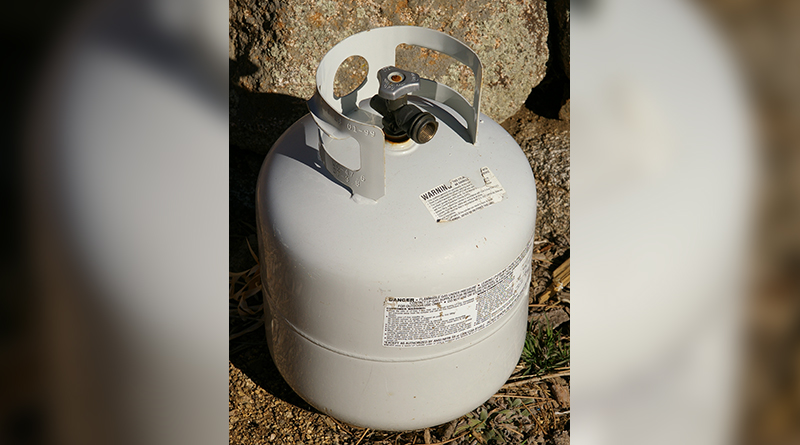
Tank size plays a major role in how often refills are needed. Many boats use standard 20-pound propane tanks, though exchange programs typically fill them with only 15 pounds. Some liveaboards report getting two and a half months from an exchanged tank and just over three months from a full 20-pound fill under average conditions. Smaller boats sometimes use 10-pound tanks because they’re easier to handle, while a few larger vessels carry 40-pound tanks, particularly when propane refrigeration is installed.
Regardless of size, experienced liveaboards almost universally recommend carrying two tanks. Having a spare allows you to swap immediately when one runs empty, which inevitably happens at the least convenient time. The spare tank must be stored in the same type of vented locker as the primary tank so any leak exits the boat safely.
Tracking propane levels does not have to be complicated, but it does require attention. Inline propane gauges are popular and can provide a general sense of when a tank is getting low. While not perfectly precise, many boaters find them accurate enough to prompt a tank change before an important bake or long meal. Gauges are especially useful when preparing foods that cannot simply be paused if the flame goes out.
Some cruisers rely on low-tech methods. Pouring warm water down the side of a tank and feeling where it turns cold can indicate the liquid propane level. Others use small luggage or fish scales to weigh the tank and subtract the tare weight listed on the cylinder. Knowing the remaining fuel by weight can be surprisingly accurate and removes guesswork.
A few liveaboards also keep a one-pound propane canister on board with an adapter as an emergency backup. It’s not intended for regular use, but it can get you through a morning coffee or quick meal when a main tank runs dry at anchor.
Safe propane use on a boat extends beyond storage and monitoring. All marine propane systems should include a solenoid shutoff valve located at the tank and controlled from inside the boat. This allows propane to be turned off instantly when not in use. Leak detectors with audible alarms should be installed low in the cabin, where propane would accumulate first. Flexible hoses should be inspected regularly for cracks, chafe, or UV damage, and fittings should be checked for corrosion.
There are also clear practices to avoid. Propane tanks should never be stored inside the cabin, engine room, or lazarette without proper venting. They shouldn’t be lashed on deck without a dedicated locker, even temporarily. Modifying regulators, bypassing solenoids, or ignoring expired tank certifications introduces unnecessary risk. Portable heaters or appliances not designed for marine use should never be connected to onboard propane systems.
For liveaboards, propane is one of those systems that fades into the background when it works well and becomes unforgettable when it doesn’t. Understanding how much you use, keeping tanks in good condition, storing them correctly, and planning ahead turns propane from a potential hazard into a dependable everyday resource.
Like most systems on a liveaboard boat, propane rewards those who respect it. With proper installation, thoughtful habits, and a little preparation, it remains one of the most practical and efficient fuels available for life afloat.