How custom marine mattresses and bedding are elevating comfort, improving sleep, and transforming life on the water.
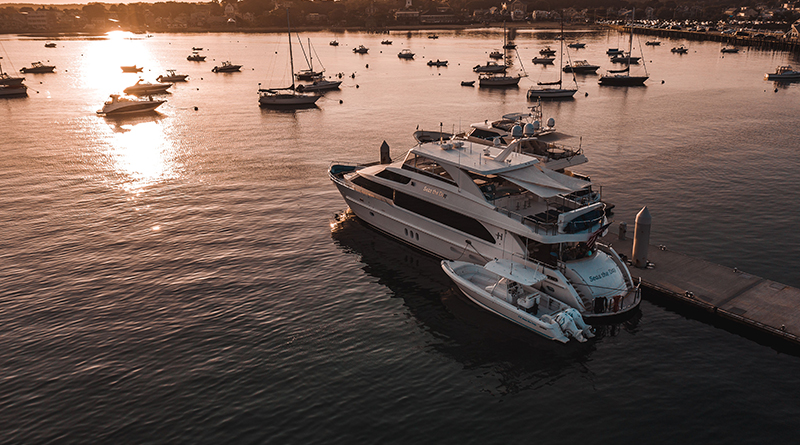
For many Southern California boaters, time on the water is no longer limited to day trips. Whether anchored off Catalina Island, spending a weekend in Two Harbors, or cruising between coastal harbors, overnight stays have become a central part of the boating experience. As a result, comfort below deck is no longer an afterthought, it’s a priority.
At the center of that shift is something often overlooked but deeply felt: sleep.
While boat manufacturers have made strides in cabin design, many standard marine mattresses and bedding setups still fall short of what boaters expect from a restful night. Irregular berth shapes, thin cushions, moisture exposure, and limited ventilation can all impact sleep quality, turning what should be a relaxing escape into a restless night.
That is where custom marine mattresses and bedding solutions are beginning to reshape expectations.
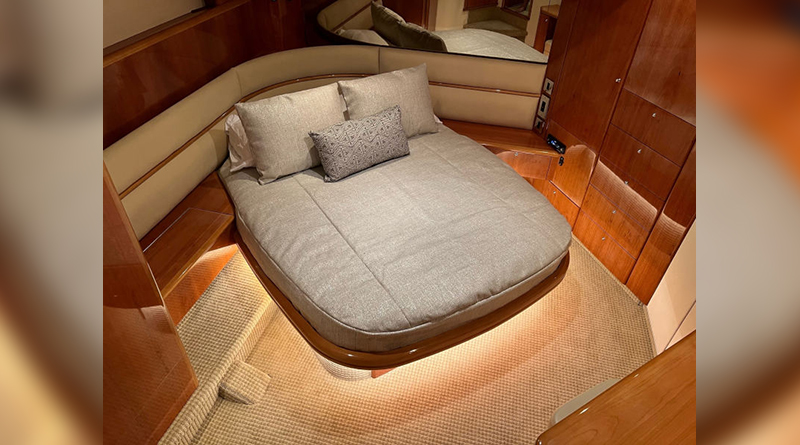
Unlike traditional, one-size-fits-all options, custom marine mattresses are designed specifically for the unique layouts found on boats. From V-berths with angled sides to compact quarter berths and island berths with tight clearances, these solutions are tailored to fit the exact dimensions of a vessel, eliminating gaps, awkward overhangs, and wasted space.
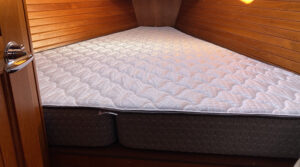
For boaters, that precision fit translates directly into usability. A well-fitted mattress not only maximizes available sleeping space but also improves overall comfort, allowing occupants to stretch out fully without compromise. In smaller cabins, where every inch matters, that difference can be significant.
According to Jessica Walker of Walker Interiors located in San Diego, many boaters underestimate just how much their onboard comfort can be improved. “Almost anything causing an uncomfortable experience below deck can be improved upon,” she said, noting that upgrades can range from sound-dampening materials that reduce noise and vibration to mattresses that rival those found at home while still being designed for the marine environment. “There is no reason to not be as comfortable as you are at home.”
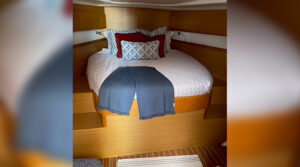
Material selection is another key factor driving the evolution of onboard sleep systems. Marine environments present unique challenges, including humidity, salt air, and temperature fluctuations. Traditional residential materials often do not hold up under these conditions, leading to issues such as mildew, odors, and premature wear.
Walker explained that designing for a boat requires a completely different approach than designing for a home, particularly when it comes to durability. She emphasized that marine interiors demand materials specifically engineered to withstand harsh conditions, while also maintaining comfort and style. “There is definitely a different realm of materials that I prioritize on a boat versus a house,” she said. “I’m always looking at wear ratings, UV ratings, and stain resistance,” noting that high-use areas on a vessel experience significantly more concentrated traffic than in a home.
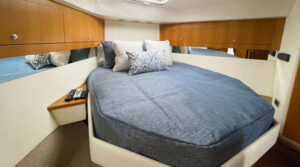
Further reinforcing that shift toward purpose-built solutions is Ryan Baldwin, founder of Yacht Bedding, a company that has grown into a leading provider of custom marine mattresses and bedding with showrooms in Huntington Beach and San Diego, among other locations. Baldwin launched the company in 2012 alongside his wife, Shannon, after encountering the very challenges many boaters still face today.
“My wife and I started YachtBedding.com when we were on our own journey to buy a boat,” Baldwin explained. “We couldn’t figure out why people still had the original bedding, and then realized every cabin had a unique size and shape. At the time, there wasn’t an easy way to get pricing or information for custom mattresses online.”
Since then, the company has built a reputation around simplifying what was once a complicated process, offering custom fabrication, digital patterning, and a library of more than 2,500 boat models to ensure proper fit. That experience, combined with in-house manufacturing, positions Baldwin as a key voice in how marine bedding is evolving.
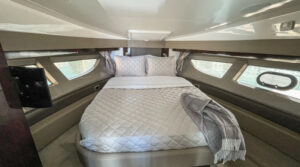
Modern marine mattresses address these challenges through specialized foam constructions and moisture-resistant materials. High-density foams, layered support systems, and breathable fabrics are designed to promote airflow and reduce heat retention, helping to regulate temperature throughout the night.
Baldwin noted that while construction plays a role, long-term performance often comes down to environmental control. “When it comes to preventing mold and mildew, it really comes down to maintaining humidity and keeping your bed dry,” he said. He recommends keeping cabin humidity below 50 percent and using tools like dehumidifiers and fans to improve airflow, particularly when the boat is not in use.
In addition, many custom solutions incorporate antimicrobial and quick-drying properties, reducing the risk of mold and extending the lifespan of the mattress. For boaters who spend extended time aboard, particularly in coastal climates like Southern California, these features are not just conveniences, they’re necessities.
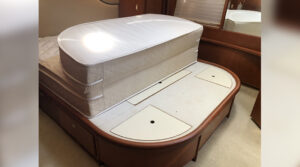
Managing moisture and airflow, in particular, remains one of the most important considerations below deck. Walker pointed out that while marine-rated materials are designed to resist mildew, there are additional steps boaters can take to improve long-term performance. Simple solutions such as installing fans to keep air moving, even when the boat is closed up, can make a noticeable difference. She also recommends specialty products like mesh underlayment beneath mattresses to allow airflow and prevent trapped moisture, as well as mildew-resistant padding and odor-eliminating products.
Baldwin echoed that approach, pointing to design features that actively combat moisture buildup. “We often incorporate waterproof vinyl on the bottom of our mattresses, and in some cases along the sides, especially where condensation forms along the hull,” he said. He also recommends elevating mattresses slightly using systems like slats or ventilation layers to prevent direct contact with damp surfaces.
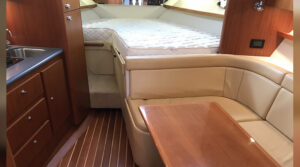
Beyond the mattress itself, bedding has also become part of the conversation. Custom-fitted sheets, mattress toppers, and protective covers are now available to match the exact dimensions of marine berths. These additions help create a more residential feel below deck, turning a utilitarian sleeping area into a space that feels intentionally designed.
For couples, families, and guests, that added level of comfort can make a noticeable difference in the overall boating experience. A good night’s sleep allows boaters to wake up refreshed, ready for a full day on the water, whether that means fishing offshore, exploring the coastline, or simply enjoying time at anchor.
The benefits extend beyond comfort alone. Improved sleep quality can also enhance safety and decision-making on the water. Fatigue is a known factor in boating incidents, and ensuring that operators and passengers are well-rested contributes to a more enjoyable and responsible experience overall.
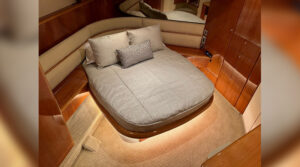
When it comes to upgrades, Walker notes that one change stands out above the rest. “Mattresses, get the new mattress,” she said, explaining that many boaters do not realize how uncomfortable their existing setup has become until it’s replaced.
Baldwin agrees, adding that comfort is only one piece of the equation. “Most people focus on size and comfort first, but there are other factors like how the mattress fits the space, whether it needs hinges for storage access, and how bedding will function day to day,” he said. His team often works directly with boaters to customize not just the mattress, but how it integrates with the vessel’s layout and use.
Customization also allows boaters to tailor their setup based on how they use their vessel. Those who frequently host guests may prioritize durability and easy maintenance, while long-range cruisers might focus on maximum comfort and support for extended stays. Walker emphasized that understanding how a boat is used is essential to achieving the right outcome, whether that includes accommodating families, pets, or fishing activity.
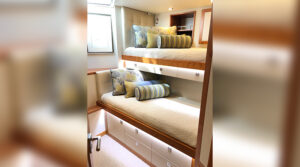
That versatility extends to creative solutions for unconventional spaces. Baldwin pointed to settee berths as one example, where convertible seating areas can benefit from added comfort systems. “We developed a topper sleep system specifically for those spaces,” he said. “It creates a true sleeping surface over cushions and can be easily stored when not in use.”
Space optimization remains a critical consideration as well. Many custom mattress providers offer solutions that integrate with existing storage compartments or allow for folding and modular designs. This ensures that boaters do not have to sacrifice functionality in order to gain comfort, a balance that is especially important on smaller vessels.
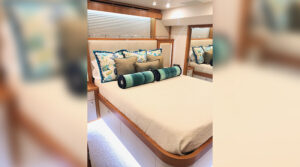
As more Southern California boaters embrace overnight and multi-day use, the demand for upgraded onboard living continues to grow. What was once considered a luxury is quickly becoming a standard expectation, particularly among those who view their boat as more than just a platform for fishing or cruising.
In this evolving landscape, custom marine mattresses and bedding solutions represent a practical upgrade with immediate impact. They address one of the most fundamental aspects of life on the water, rest, while enhancing the overall experience in a way that is both tangible and lasting.
For boaters looking to make the most of their time aboard, the difference often comes down to the details. And in many cases, those details begin where the day ends, below deck, where comfort, fit, and thoughtful design come together to transform how life on the water feels.
For more information on custom marine bedding solutions and to explore options tailored to specific vessel types, visit Yacht Bedding at www.yachtbedding.com.