Breakthrough manufacturing partnership could reshape performance and availability for boaters nationwide.
A manufacturing collaboration taking shape in Detroit may soon have ripple effects felt far beyond the Great Lakes, including along the harbors and offshore waters of Southern California.
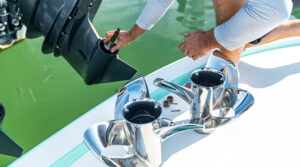
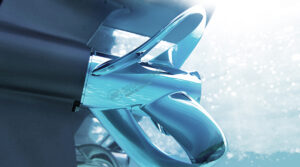
Sharrow Engineering, the company behind the looped-blade Sharrow™ Propeller, has announced a major step forward in scaling production through a partnership with Ford Motor Company. By leveraging Ford’s advanced manufacturing expertise, specifically in 3D sand-casting, the company has reduced production timelines from months to just weeks, a shift that could significantly impact availability ahead of peak boating seasons.
While the development is rooted in the Midwest, its implications are particularly relevant for coastal boating communities like those in Southern California, where performance, efficiency, and reliability are not just conveniences but essential components of time spent on the water.
From bottleneck to breakthrough
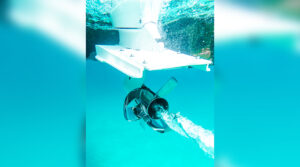
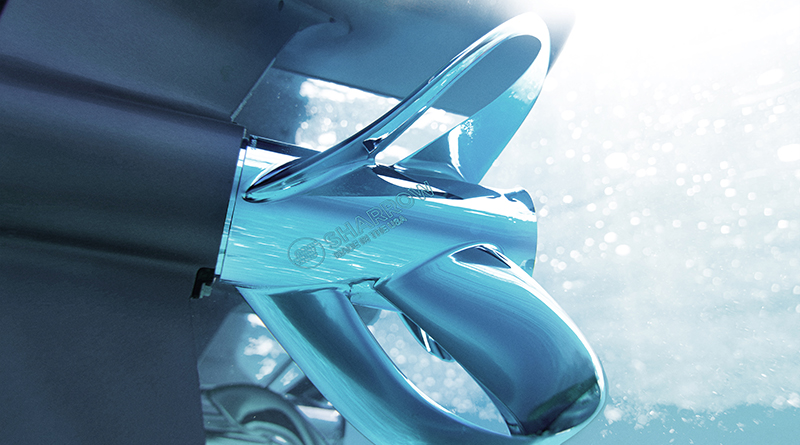
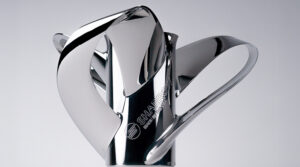
Since its introduction in 2020, the Sharrow Propeller has generated strong interest across the recreational and commercial marine sectors. Its distinctive design, which replaces traditional open blades with a continuous loop, has been widely recognized for improving efficiency, reducing vibration, and lowering noise levels.
However, demand has consistently outpaced production.
According to a news release from Businesswire.com, the primary challenge has not been the technology itself, but the ability to manufacture the propellers at scale while maintaining the precision required for their complex geometry. Traditional casting methods could take up to 130 days to complete a single production cycle.
That timeline has now been reduced to approximately two weeks.
The breakthrough comes through the use of advanced 3D-printed sand-casting techniques, developed through collaboration between Sharrow Engineering, Ford’s Advanced Industrial Technology & Platforms team, and the innovation ecosystem at Michigan Central, a Detroit-based hub focused on next-generation mobility technologies.
According to a news release from Businesswire.com, the teams spent months refining the casting process, adapting Sharrow’s intricate designs to a method capable of supporting higher production volumes without sacrificing quality.
The result isn’t only faster production, but a scalable pathway forward.
Why it matters for Southern California boaters
For boaters in Southern California, where everything from fuel costs to marina congestion can shape the on-water experience, advancements in propulsion technology carry real-world significance.
“Southern California is one of the most performance-driven boating markets in the world, with boaters running long distances offshore and along the coast,” said Greg Sharrow. “The Sharrow Propeller delivers faster acceleration, dramatically smoother operation, and a dramatic improvement in fuel efficiency compared to traditional propellers.”
Efficiency gains, often cited at up to 30 percent compared to traditional propellers, can translate directly into extended range or reduced fuel consumption. In regions where offshore runs to areas like the 14 Mile Bank or Catalina Island are common, those savings are more than theoretical.
Sharrow also pointed to the role of manufacturing advancements in making the technology more accessible. “The manufacturing advancements we’ve made in Detroit with Ford allow us to scale production and shorten delivery times, which means more boaters in places like Southern California will be able to access the technology much more quickly than before,” he said.
Noise reduction, another key feature of the Sharrow design, also plays a role in both comfort and function. Quieter propulsion can improve onboard experience while potentially reducing disturbance to marine life, an increasingly important consideration in environmentally sensitive waters.
Availability has been the limiting factor.
With production previously constrained by lengthy manufacturing timelines, many boaters interested in upgrading have faced extended wait periods. The ability to compress production into weeks rather than months could change that dynamic, particularly heading into busy summer seasons when demand for upgrades and maintenance peaks.
A broader shift in marine manufacturing
Beyond the immediate benefits to boaters, the collaboration signals a larger shift in how marine components may be produced in the future.
According to a news release from Businesswire.com, Ford has been working with 3D sand-casting technology for more than two decades, applying it across automotive and industrial applications. Bringing that expertise into the marine space represents a convergence of industries that have historically operated separately.
“This is about more than just propellers,” Ford representatives noted in the release. “It’s about making advanced manufacturing capabilities accessible so companies can compete on a global scale.”
That idea, bridging innovation with production, has long been a challenge in the marine sector, where breakthroughs often take years to reach widespread adoption due to manufacturing limitations.
By contrast, this model emphasizes speed, scalability, and collaboration.
Meeting growing demand
The demand for the Sharrow Propeller has expanded rapidly in recent years, not only among recreational boaters but also within commercial fleets and government applications.
According to a news release from Businesswire.com, interest in the technology has extended beyond marine propulsion into other sectors, including energy systems, industrial applications, and even advanced mobility concepts.
Still, for many in the boating community, the appeal remains grounded in practical performance.
“The Sharrow Propeller is fundamentally different from a traditional propeller because the blades form a continuous loop instead of having open tips,” Sharrow explained. “That design reduces tip cavitation and energy loss, which translates into faster acceleration, better handling in tight quarters and at high speeds, smoother operation, and quieter performance on the water.”
He added that the difference is immediately noticeable for boaters. “Boaters notice the difference immediately when they run their boat, especially in mid-range acceleration and overall ride quality.”
Faster planing speeds, improved handling, and smoother operation are all factors that resonate with Southern California boaters navigating everything from crowded harbors to offshore fishing grounds.
The ability to deliver those benefits at scale is what makes this latest development notable.
According to a news release from Businesswire.com, Sharrow described the production breakthrough as “game-changing,” noting that what once took an entire boating season to manufacture can now be completed in a fraction of the time.
A U.S.-based manufacturing story
The collaboration also highlights continued investment in domestic manufacturing.
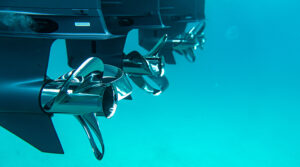
Sharrow Engineering has expanded its footprint in Michigan multiple times in recent years, including the development of a 60,000-square-foot facility to support growing production needs. The partnership with Ford and regional foundries further strengthens that foundation, reinforcing a U.S.-based supply chain at a time when global manufacturing disruptions remain a concern.
For Southern California boaters, that stability can translate into more consistent product availability and potentially shorter lead times for service and replacement parts.
Looking ahead
While the immediate focus remains on meeting current demand, the implications of this partnership extend further.
According to a news release from Businesswire.com, the same core technology behind the Sharrow Propeller is being explored for use in other applications, including drones, renewable energy systems, and industrial equipment. The ability to rapidly prototype and scale production through facilities like Michigan Central and Newlab Detroit creates a framework for continued innovation.
As availability increases, Sharrow noted that access will expand alongside it. Southern California boaters can purchase directly through the company, where each vessel is matched with the appropriate propeller configuration based on its engines and hull design. He also pointed to future opportunities for hands-on experience, noting that as production scales, the company is expanding its dealer and demo network nationwide.
The company is also launching the Sharrow Performance Tour, which will bring on-water demonstrations to major boating markets, with Southern California identified as a key region for upcoming events.
For the marine industry, that could mean faster adoption of new technologies and a shorter path from concept to consumer.
The Southern California perspective

In a region defined by its connection to the water, advancements like this are more than industry news, they are part of an ongoing evolution in how people experience boating.
From sportfishing operations running offshore to recreational boaters cruising between harbors, the demand for efficiency, reliability, and performance continues to grow.
At the same time, environmental considerations are becoming increasingly central to the conversation. Technologies that reduce fuel consumption and minimize noise align with broader efforts to make boating more sustainable without compromising capability.
That balance is particularly relevant in Southern California, where working waterfronts, recreational boating, and environmental stewardship all intersect.
A turning point for access
Ultimately, the significance of this development may come down to accessibility.
Innovations in marine technology often arrive with promise but remain limited in reach due to production constraints or cost barriers. By dramatically reducing manufacturing timelines, the collaboration between Sharrow Engineering and Ford has the potential to move the technology closer to mainstream adoption.
For boaters, that could mean more options when it comes to upgrading performance and efficiency.
For the industry, it represents a step toward a more agile and responsive manufacturing model.
And for regions like Southern California, where time on the water is both a lifestyle and a livelihood, it underscores how advancements happening across the country can shape the experience at the local level.
As the summer boating season approaches, one thing is clear, the intersection of innovation and manufacturing is accelerating, and the effects are beginning to reach the docks.